The Complete Guide to Buying Security Lights

In today’s security-conscious world, protecting our homes has never felt more important. Thankfully, technology has progressed so far that homeowners can keep track of their homes from anywhere in the world. Yet, for all the fancy gadgets and gizmos out there, one of the most effective methods of security remains the trusted security light.

In this article, we’ll cover everything you need to know about security lights, so that you can keep your home safe and secure, no matter your requirements. Keep reading to learn more…


Why security lighting is so important


Beyond the mere illumination provided, security lighting has myriad benefits.

When positioned correctly (don’t worry, we’ll cover the ins and outs of positioning later on) security lights provide peace of mind to homeowners that their home and possessions are secure.

A well-lit exterior sends a clear signal to any wrong-doers in the vicinity. An occupied, monitored property is harder to approach unseen.

And this isn’t just hyperbole. In 2019, a study by Nottingham Trent University’s Quantitative Criminology professor, Andromachi Tseloni, found that the best burglary deterrent was the WIDE combination – window locks, indoor lights on a timer, door double or deadlocks, and external lights.

By installing lights around entry points and dark corners, you build confidence in your home’s defences.

When paired with additional measures, such as cameras or alarms, you can improve the effectiveness of your security.

Security cameras perform best under consistent, uniform lighting. Sudden changes in brightness can wash out footage and obscure details. Security lights bring even illumination across key areas of your property, while reducing motion blur at night.

But beyond protection, security lights can help light up dark pathways, driveways, and steps, which may pose a hazard in low light conditions.


What are the different types of security lights?


Security lighting can be split in categories defined by power source and activation method, each with their own strengths and considerations. Let’s start by looking at the different power sources:


Solar-powered security lights

Over recent years, solar-powered security lights have boomed in popularity.

These lights convert sunlight into electrical energy via a photovoltaic panel, storing charge in an onboard battery during daylight hours.

Once ambient light falls below a set threshold, the stored power drives LEDs to illuminate without drawing from the mains electricity supply.

Because they require no cabling or electrician, installation is as simple as mounting both panel and lamp in an unobstructed sunlit area. Modern units often separate panel and luminaire to optimise orientation and ensure reliable performance even in variable UK climates.

Benefits of solar-powered security lights include:

  • Low costs: relying on solar panels means there is no impact on your electricity bill.
  • Easy installation: as simple as mounting both panel and lamp in unobstructed sun.
  • Flexible placement: ideal for remote outbuildings or areas without mains access.
  • Environmental benefit: green energy reduces carbon footprint.
  • Low maintenance: panel cleaning and periodic battery checks suffice.

However, there are some downsides to solar-powered security lights. These can include:

  • Variable output: dependent on sunlight exposure and seasonal variations.
  • Limited runtime: shorter illumination after consecutive cloudy days.
  • Placement constraints: panels must face south and remain unshaded.


Wired security lights

Wired security lights draw continuous power from your home’s mains electrical supply. This allows them to provide a constant, high-intensity beam regardless of weather or season.

Hardwired connections typically run through an outdoor-rated conduit to a junction box, where live, neutral and earth conductors feed floodlights, wall lights or spot fixtures.

While installation usually requires an electrician’s expertise, the result is a reliable, maintenance-free lighting solution.

Wired security lights are commonly used for the following reasons:

  • Steady performance: unaffected by weather variations or daylight hours.
  • High output: suitable for large driveways, commercial sites or stadiums.
  • System integration: compatible with home automation, alarms and centralised control.
  • Unlimited runtime: no battery constraints.

However, drawbacks include:

  • Installation complexity: likely requires an experienced electrician.
  • Running costs: use contributes to household electricity consumption.
  • Fixed positioning: relocation will require rewiring.

With these different power source categories covered, let’s look at the activation method categories:


Motion sensor security lights

Motion sensor lights employ detection technologies, commonly passive infrared (PIR), microwave or a combination of both, to sense movement and activate illumination on demand.

PIR sensors monitor changes in heat signatures across their Fresnel-lens-enhanced field, triggering lights when a warm body crosses the beam.

Microwave units emit low-power radar pulses and respond to Doppler shifts caused by motion, extending coverage through light foliage or around corners.

Hybrid models require both infrared and microwave activation, dramatically reducing false triggers. The lights switch off after a pre-set interval, conserving energy while delivering instant alerting.

Motion sensor security lights are very popular because of their advantages:

  • Energy efficiency: on-demand operation reduces wasted light.
  • Minimised light pollution: remains dark until triggered.
  • Adjustable detection: sensitivity, beam duration and coverage angles can be configured.
  • Heightened security: sudden illumination when motion is sensed, deterring unwelcome visitors.

However, motion sensor security lights do have their drawbacks. These include:

  • False alarms: depending on the detection technology selected, minor movements or temperature flares can trigger a higher number of false alarms.


Timer-activated security lights

As the name suggests, timer-activated lights rely on internal clocks or photocell sensors to switch on and off at predetermined times.

Schedules are programmed in, such as dusk to midnight, allowing your home’s exterior to be illuminated automatically. Alternatively, some models use photocell sensors which monitor sunlight levels, activating when light dims below a certain threshold.

This activation method appeals to homeowners for the following reasons:

  • Consistency: lights follow predictable routines to simulate occupancy, thus deterring would-be intruders.
  • Set-and-forget: once the lights are installed, you can leave them to function as required without the need for constant monitoring.
  • Photocell models: adjust automatically to dusk and dawn, allowing for daylight changes per season.

However, there are some drawbacks to timer-activated security lights:

  • Energy consumption: use during scheduled periods has an ongoing consumption of energy.
  • Predictability: scheduled lights lack the heightened security of motion sensors.


What types of bulb are used in security lights?


In the security-lighting market, there are two main technologies that have been used for illumination: LED and halogen:


Light Emitting Diode (LED) bulbs

Over the past few decades, LED bulbs have boomed in popularity, revolutionising outdoor lighting in the process.

Unlike filament or gas-filled lamps, LEDs produce light in a tiny semiconductor chip when electrons cross a P–N junction and release energy as photons.

Modern LEDs use materials like gallium nitride to create bright white light with very little wasted heat. A small driver keeps the current steady, and an aluminium heat sink draws away warmth to protect the diode. Built-in lenses focus the beam, cutting down on glare and spill.

LEDs are favoured across a wide range of products because of their advantages:

  • Energy saving: LEDs consume up to 85% less electricity than halogen equivalents.
  • Lifespan: ratings range from 25,000 to 100,000 hours of continuous operation.
  • Responsiveness: LEDs achieve full brightness within microseconds, making them perfect for motion-activated fixtures.
  • Colour variety: LEDs offer a spectrum of hues, from warm white (2,700 K) to daylight (6,500 K), to suit security, decorative or wildlife-friendly schemes.
  • Directional output: built-in optics focus light precisely where required, minimising spill and light pollution.

Halogen bulbs

Halogen bulbs house a tungsten filament inside a high-temperature quartz envelope filled with a small amount of halogen gas (usually iodine or bromine).

This “halogen cycle” captures evaporated tungsten and redeposits it onto the filament, allowing it to operate at higher temperatures than standard incandescents.

Despite their age, halogen lamps remain a popular option for many. However, that is quickly changing.

In 2021, the UK government announced plans to end the sale of halogen light bulbs as part of a wider effort to tackle climate change. As such, LED is fast becoming the primary option for security lighting.


What to look out for in security lighting


If you’re in the market for new security lighting for your property, there are a number of considerations you need to make to ensure the product is right for you:

Lumens vs. Watts

But before we get into the specifics, it’s important to understand lumens and watts.

For decades, wattage served as the shorthand for lamp brightness, but with the rise of energy-efficient technologies, this practice has become misleading.

  • Lumens: measure the total quantity of visible light emitted by a source. Higher lumen values correspond directly to greater perceived brightness at fixture level.
  • Watts: quantify the rate of energy consumption, not the light output itself. Two bulbs rated at 10 W might produce very different lumens if one uses LED technology and the other an older gas-discharge mechanism.

With that covered, let’s look at the important factors.


Illumination

Achieving a balance between brightness and coverage will determine how effectively security lights perform.

Two metrics govern these factors: lumens, and lux.

As we just covered, lumens indicate a lamp’s raw output. For general-purpose outdoor security:

  • 50–300 lumens: will create subtle accent or landscape lighting, drawing the eye to features without overwhelming surroundings.
  • 700–1,300 lumens: will illuminate driveways and paths, providing safe passage and clear sight lines.
  • 1,500–2,000 lumens: will illuminate entrances, garages or high-value target zones where detail is essential.

Lux, on the other hand, measures illumination over a specific area. It refines lumen data by accounting for area.

One lux equals one lumen per square metre. When a 1,000-lumen floodlight disperses across 10 m², the resulting 100 lux provides strong visibility for CCTV capture and human recognition.

Conversely, too many lumens over a wide angle may yield low lux values, leaving shadows and blind spots.

Coverage hinges on beam angle and lamp positioning:

  • Narrow-beam (15°–40°): spotlights concentrate light for focused tasks, such as highlighting a doorway or house number.
  • Flood-beam (60°–120°): fixtures bathe larger areas in uniform light, making them ideal for driveways and gardens.
  • Adjustable-head lights: allow fine-tuning of direction, eliminating dark corners and avoiding neighbour disturbance.

Practical setup tips:

  • Mount lights at a height of 2.5–3 m for optimal spread without excessive glare.
  • Angle fixtures slightly downward (5°–15°) to prevent light spill into windows or neighbouring properties.
  • For irregular spaces, overlap adjacent beams by 10–20% to eradicate blind spots.

Considering both lumen and lux will help you achieve a security lighting scheme that illuminates every corner of your property without drawing complaints or wasting energy.


Durability

A good security light must endure rain, wind, UV exposure and seasonal temperature swings, year after year without failing.

Before purchase, check a light’s ability to withstand the elements to ensure continuous protection for your property, which can be achieved with the IP rating.

The industry standard for outdoor fixture ingress protection is the IP rating, which comprises two digits:

  • First digit (solids): measures resistance to dust and foreign objects on a scale from 0 (no protection) to 6 (dust tight).
  • Second digit (moisture): indicates water resistance from 0 (no protection) to 8 (immersion beyond one metre).

For most UK and northern European environments, an IP65 rating or higher is recommended.

IP65 fixtures are impervious to dust and withstand water jets from any direction, making them suitable for exposed walls, soffits and freestanding poles.

In coastal or industrial locations, IP66 or IP67 ratings can help to guard against salt spray, airborne contaminants and temporary immersion.


Placement

Another key consideration when buying security lighting is placement. Different lighting equipment is better suited to different locations and lighting conditions, so it is important to make sure you pick the right light for the job.

Focus first on entry points, such as front and back doors, garage entrances and ground-floor windows, that offer the biggest opportunity for a visitor to approach. Here, motion-sensored or time-activated lights will have the greatest effect.

Position fixtures at a height of 2–3 metres. This height is high enough to prevent tampering, yet low enough to achieve adequate beam coverage. Angle floodlights downward by 5°–15° to avoid glare while minimising dark shadows at ground level.

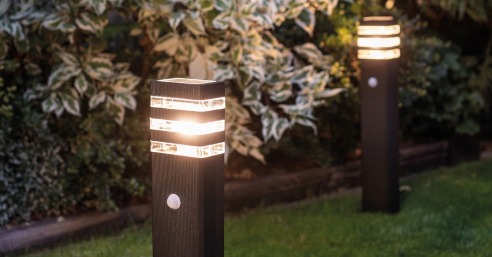
For lighting illuminating pathways, terraces, or driveways, ground-level post lighting is an ideal option. Commonly available with PIR movement sensors, these lights can provide around 6 metres of detection range, giving visitors ample visibility on approach.

If you select motion sensors, make sure they have an unobstructed field of view, free from overhanging foliage or parked vehicles.

For solar-powered lights, these need to have adequate access to sunlight, ideally on a south-facing wall with no shade during peak daylight hours.

For wired lights, isolate the circuit at the main breaker before beginning work. Run outdoor-rated cable through a shallow trench or along walls in conduit. Connect live, neutral and earth conductors within an IP-rated junction box, seal all entry points against moisture, affix the luminaire securely, then restore power and test sensor settings.


Smart features

If smart technology is your penchant, there are a number of options available.

For those who want to adjust control on the go, look for lighting with integrated app control. These products allow configuration of options such as illumination, detection range, time-activation, and more, giving you the control you need when away from home.

Smart home integration options mesh seamlessly with your existing home technology, allowing you to preprogram lighting scenes, combine sensor sensitivity, or integrate with smart assistants like Amazon Alexa, or Google Assistant to enable voice commands.

Wi-Fi connection options prevent connection dropouts, and protect your security lighting with end-to-end encryption and regular firmware updates to mitigate hacking risks.

While not standard on every security light on the market, these additional security measures can help to protect your home, and keep you in control.


Our top security light recommendations


With those considerations ticked off, let’s run through our top recommendations for security lighting to keep your home and property safe and secure:

Best security floodlight
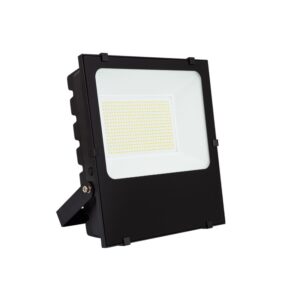
If superior illumination is your desire, the 200W Dimmable Warm White LED Floodlight 27000lm PRO is your best choice.

Featuring an impressive 145 lm/W efficiency, its design allows for flexible placement, while the advanced SMD2835 LUMILEDS technology and 120º beam angle provide unbeatable light quality with a high colour rendering index. 

Built from aluminium with optimal heat dispersion and an IP65 rating, this floodlight is built to last. Enjoy its long life, low maintenance, and energy savings, all with the convenience of a flicker-free, immediate start.

Find the 200W Dimmable Warm White LED Floodlight 27000lm PRO in our online shop.


Best post security light
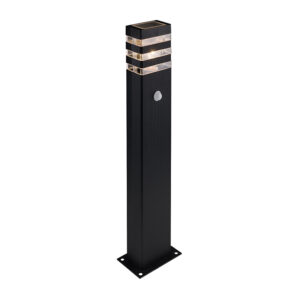
When those pathways and driveways are in need of illumination, the Edit Rio 650 Outdoor Bollard Light with PIR Sensor is an excellent solution.

Featuring a sleek finish and a polycarbonate diffuser, this bollard light offers a bright, even illumination. The inbuilt PIR movement sensor has a detection range of up to 6 meters and 120°, allowing for reliable, secure detection. 

The aluminium construction is designed to withstand the elements, making it a great, durable option for year-round outdoor use. 

Enhance your outdoor area with the Edit Rio 650 Outdoor Bollard Light with PIR Sensor, available at Lyco.


Best solar-powered security lighting
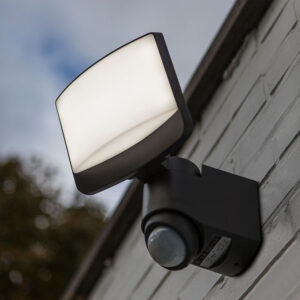
If your goal is illumination without an electrical power connection, the Lutec Sunshine 8W LED Solar Floodlight with PIR sensor is our top choice.

With a bright 8W integrated daylight white LED light source, this floodlight provides 500 lumens to illuminate your decking, courtyard, or driveway with ease. A separate solar panel comes with a 5-meter-long cable so you can position both the floodlight and power source in the optimal position without compromise.

The Lutec Sunshine 8W LED Solar Floodlight with PIR sensor is available for purchase on the Lyco website.


Best smart security lighting

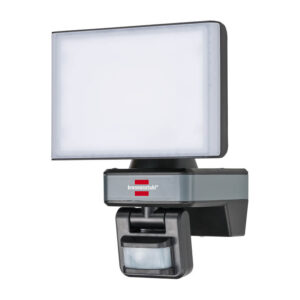
For the tech-savvy among you, our recommendation for the best smart security lighting is the Brennenstuhl 20W Cool White LED Wifi Floodlight With PIR Sensor

This smart LED floodlight can be controlled via the free Brennenstuhl Connect app, allowing for adjustment of light intensity, light temperature, timer, afterglow, and much more.

With a powerful 20W light, this Wi-Fi security light is a great option for automatically illuminating entrance areas, driveways, or gardens. Additionally, this product features voice control, with compatibility with Alexa and Google Assistant voice assistants.

You can find the Brennenstuhl 20W Cool White LED Wifi Floodlight With PIR Sensor on our website.


Find the right security lights at Lyco


We hope that you have found this guide to buying security lights useful. At Lyco, we have a wide range of security lighting to suit your security needs. 

We are the UK’s premier lighting company, providing the latest products from around the world at the very best prices. We are able to dispatch 98% of all orders on the same day they are received.

If you want to know more about our products and services, our team have the knowledge to assist you. Contact us today to learn more.

Shop the best security lights at Lyco today

For more news, information, buying guides, and product advice, check out the Lyco blog…

How Light Works: The Ultimate Guide | Driveway Lighting Tips For Hospitality Venues | IP44 Lighting For Outdoors – Our Top 10

How Do Security Lights Work?

security lights

For many homes and businesses, security lighting is the first line of defence against trespass and accidents after dusk. When light is cast over driveways, gardens, and entry points upon the detection of movement, these fixtures provide a clear signal to potential intruders that a property is actively monitored.

But how does this technology work, and why is it so important? In this article, we’ll look into the specifics of motion detection and security lights, and the key differences between each energy source sensed. Keep reading to learn more…

security lights

Why are security lights so effective?

Security lighting has remained a strong, viable option for many businesses and homeowners because of its ability to remove uncertainty.
By casting light into the cover of darkness, you tip the balance back in your favour, away from unwanted intruders. An illuminated exterior increases the chance of being seen, whether by neighbours, passers-by or CCTV cameras, and makes covert entry far more difficult.

Criminals rarely pick targets under a spotlight, so well-placed floodlights, timers or motion-activated units reduce opportunities for attackers to probe windows, doors, or perimeter fences under cover of night.

Beyond the immediate visual barrier, security lights also help establish a neighbourhood watch mentality. When one property is brightly lit, it raises collective awareness. Neighbours become more alert to movement, discouraging repeat offences in the wider area.

Additionally, security lighting is both cost-effective and low-maintenance. Unlike alarms that rely on occupant response, lights work continuously (or upon demand) to project an aura of occupancy.

How motion sensors work

Motion sensors are devices purpose-built to detect changes in their surroundings, be that light intensity, sound waves, or heat.

A motion sensor is commonly made up of three parts: a sensing module, a control circuit and an output switch.

The sensing module continuously monitors a particular form of energy. These energy forms are:

  • Infrared radiation for heat.
  • Ultrasonic pulses for sound.
  • Microwave emissions for electromagnetic waves.
  • A simple infrared beam for active detection.

The control circuit analyses real-time data from the module, comparing it against a stored reference level. A motion sensor relies on sensing a change in stable conditions.

Once the sensor notices these substantive changes (commonly known as a “trigger event”) the control circuit activates the output stage. This may be a solid-state relay or a low-voltage driver for LEDs, though older devices often use mechanical relays to connect mains power.

The light then remains on for a defined period, typically adjustable from a few seconds up to several minutes, before the sensor re-establishes the baseline and turns the lamp off.

Sensitivity settings determine how easily a sensor responds to minor disturbances, allowing for some fine-tuning to avoid false alarms from small animals, wind-blown foliage or passing traffic. Detection range depends on the sensor type and lens design.

Threshold controls (“lux” for light-level sensitivity, and “time” for activation duration) allow homeowners to specify that motion detection only occurs at night or to tailor how long lights remain illuminated.

Motion sensors offer an intelligent activation method for security-lighting systems, providing responsive, energy-efficient illumination exactly when and where it is needed.


What are the different types of motion sensors?

Security lights use a range of sensing technologies to detect movement and activate illumination. As we mentioned earlier, there are four main types of energy forms sensed, but there are five different sensor types. Let’s look at them in more detail:

Passive infrared (PIR) sensors

Passive infrared sensors detect the natural heat energy (also known as infrared radiation) emitted by living bodies.

A PIR unit contains two pyroelectric elements, each monitoring a zone. Under stable conditions, both elements register the same ambient temperature.

When a warm object, such as a person or animal, moves across one zone into the next, the resulting temperature differential generates a small voltage. The sensor recognises this change and triggers the light.

A Fresnel lens array sits over the sensor elements, dividing the field of view into multiple narrow beams. This lens both magnifies infrared wavelengths (typically 8–12 µm for a human body) and extends range.
When an object traverses these beams, the sensor experiences a rapid rise and fall in detected IR energy, indicating motion.

Benefits of PIR sensors:

  • Passive operation: emits no energy, so it cannot be seen through glass or walls.
  • Good range: typically 8–12 metres with a 90°–120° coverage angle.
  • Cost-effective: PIR sensors use low-power, making them the default for domestic floodlights and wall units.

Ultrasonic motion sensors

Ultrasonic sensors emit high-frequency sound waves on a continual basis. These sound waves, usually 40 kHz, are beyond the range of human hearing.

An ultrasonic transducer broadcasts pulses into the detection zone and listens for echoes. When an object moves, it disturbs the time it takes for echoes to return.

The control circuit compares successive echo patterns, noticing any significant changes which signals movement, before switching on the light.

Because sound waves can diffract around corners and through thin partitions, ultrasonic sensors cover complex layouts where line-of-sight may be obstructed.

They can operate in complete darkness and remain unaffected by temperature fluctuations. Ultrasonic sensors are common in automatic doors and indoor security zones, but less so for outdoor lighting due to environmental noise triggers.

Benefits of ultrasonic sensors:

  • Active system: continually emits and processes sound pulses.
  • Great coverage: up to 20 metres, with wrap-around detection in enclosed spaces.
  • Highly sensitive: can detect minor movement, such as slow walking.

Microwave sensors

Operating similarly to ultrasonic motion sensors, microwave detectors instead function on the Doppler-shift principle.

A transmitter emits low-power microwave signals in the 2.4 GHz band into the area under surveillance. Moving objects reflect those waves back, and the receiver compares the frequency of the returned signal to the original. When there are changes in this shift, it indicates motion, thus prompting the sensor to activate the light.

Because microwaves penetrate non-metallic materials, these sensors can “see” through foliage, walls or thin plastic covers, allowing them to excel in large-area coverage and irregular spaces.

They are favoured in high-security or commercial sites where broad coverage and obstacle penetration are priorities.

Benefits of microwave sensors:

  • Active system: continuous wave emission like that of ultrasound sensors.
  • Great range: up to 15–20 metres, 360° detection possible with appropriate antenna geometry.
  • Better visibility: can “see” through things that other sensors cannot.

Active infrared sensors

Active infrared sensors use an emitter and receiver to form an invisible light beam. This narrow beam, typically in the near-infrared spectrum, is continuously shined from the emitter toward a photodiode receiver.

When an object interrupts this beam, the receiver detects a sudden drop in signal and triggers the light.

These systems are great for controlling specific choke points, and are commonly used in garage-door activation, warehouse loading bays, and controlled-entry corridors. However, they are less suitable for open-area monitoring due to line-of-sight requirements.

Benefits of active infrared sensors:

  • Accurate in defined zones: any beam interruption counts as motion.
  • Immunity: ambient temperature variations and most sources of false heat signatures don’t affect the beam.

Hybrid sensors

Hybrid sensors (also known as dual-technology sensors) combine two detection methods (most commonly PIR and microwave) into a single unit.

Both systems must register motion within a given time window for the light to activate, sharply reducing false alarms.

For example, the PIR circuit monitors thermal changes while the microwave module watches for Doppler shifts. Only when both signals coincide does the control relay close, illuminating the lamp.

This does, however, slightly slow the response time, as both sensors need to process the data. They are also more expensive, and require more complex calibration than single-technology units.

Benefits of hybrid sensors:

  • Low false-alarm rate: the dual-technology approach reduces false alarms, making them ideal for high security situations, critical infrastructure perimeters, banks and military sites.

Shop security lighting at Lyco

Now that you understand how security lights and sensors operate, it’s time to take your security up a notch. At Lyco, we have a wide range of security lighting to suit your security needs.

We are the UK’s premier lighting company, providing the latest products from around the world at the very best prices. We are able to dispatch 98% of all orders on the same day they are received.

If you want to know more about our products and services, our team have the knowledge to assist you. Contact us today to learn more.

Shop the best security lights at Lyco today

For more news, information, buying guides, and product advice, check out the Lyco blog

How Light Works: The Ultimate Guide | Driveway Lighting Tips For Hospitality Venues | IP44 Lighting For Outdoors – Our Top 10


Five bright gift ideas for teachers

Buying an end of term ‘thank you’ gift for your child’s teacher is never easy. Whilst on the one hand you don’t want to add to the growing pile of chocolates and ‘best teacher’ mugs that will be forming on their desk, you also don’t want to break the bank sourcing an original gift that they’ll actually enjoy.

So this year, why not think outside the box and get them a gift that’s sure to brighten up their summer? Here’s five ‘light’ ideas to get you started…

Cinematic light box

This LED cinematic light box from ed:t is a fantastic gift for a fun-loving teacher who is looking to liven up their classroom or home. The ed:t light box comes with 90 letters, numbers, and symbols, allowing for a truly personalised gift.

< Image to follow from Browser Media >

https://www.lighting-direct.co.uk/edit-battery-operated-led-magnetic-cinematic-light-box-a6-size-rose-gold.html

Solar festoon lights

Nothing says summer quite like outdoor festoons, and these pretty multi-coloured festoons from Cole & Bright are certain to brighten up any garden. Students aren’t the only ones who look forward to the summer holidays, so giving a gift that will help their teacher make the most of their time off is sure to be appreciated.

https://www.lighting-direct.co.uk/suri-solar-colour-changing-led-festoon-lights-20-lights.html

Colour-changing table light

The Orb colour-changing egg table light is a great gift to help your child’s teacher make the most of the long summer break. The colour-changing aspect of this table light means that it will suit any garden and meet the needs of any occasion, whether it’s enjoying a quiet summer evening, or livening up a garden party.

https://www.lighting-direct.co.uk/suri-solar-led-oval-outdoor-ground-feature-light-white.html 

LED solar glass lantern

The rustic seaside style of these lanterns is what makes them stand out as a truly stunning outdoor light. Additionally, the subtlety of these lanterns creates a relaxing and almost magical feel throughout any garden or outdoor area.

https://www.lighting-direct.co.uk/jar-solar-led-glass-lantern.html

‘Dream’ light

Our final gift idea is the ‘Dream’ LED rope light from ed:t – an excellent gift for the more creative and artistic teacher. This light would make a fantastic addition to any classroom to help inspire students and teachers alike.

https://www.lighting-direct.co.uk/warm-white-solar-led-rope-light-10-metre.html


Reena Reeves

Reena Reeves is a writer and editor with 15 years’ experiencing working in publishing and digital media. She has a degree in Journalism and has worked for publications such as Smash Hits magazine, OK! Magazine and The Daily Express. Reena has been writing about lighting since early 2017 and has supported us with website copy, product descriptions and articles on lighting trends and commercial lighting solutions.

Light Fittings Types – Traditional Light Bulbs

When we think of a light bulb, we used to refer to an incandescent or tungsten filament lamp with a round sphere at one end or a candle lamp that is long and thin. Nowadays we talk more about LEDs, since LED bulbs are more energy efficient, cheaper to run and better for the environment. Most light bulbs have round metal caps with either a screw or bayonet type fitting

At Lyco, we sell a wide range of traditional light bulbs as well as more specialist types, and we understand that knowing which type you need is not as simple as it once was. With this in mind, we have put together a quick guide to fitting types, and traditional light bulbs.


traditional light bulb gls


Standard Fittings & Effects

The types of lamp available with screw and bayonet caps have broadened greatly in recent years, and now include LED bulbs. With traditional cap fixtures, you get great flexibility and a wide choice of lighting effects.


Domestic Bulbs

In the UK, bayonet and screw caps are the most commonly used type of light bulb. When it comes to which type is better, there isn’t a huge amount of benefit in opting for one or the other – the only exception is that bayonets are less likely to work loose from their fixture unintentionally, and there are no threads to be accidentally stripped or removed.


Bayonet Bulbs

There are two different types of bayonet cap – standard and small. Standard bayonet is by far the most popular and is perhaps the most common light bulb of all in the UK.

The bayonet cap type fitting (BC) is perhaps the most well-known lamp fitting in the UK today. Invented towards the end of the nineteenth century and utilising a mechanism originally developed for bayonet rifles, the BC consists of a spring and two contacts with bayonet mounts on either side.

To fit a bayonet light bulb, simply depress the lamp into its holder, twist under the lugs and the bayonet mounts are retained by the springs, thus ensuring optimum contact. It is a simple push and twist motion that most of us are familiar with.


Size Variations

The most common sizes of bayonet cap fittings are BC or B22d, (where 22 refers to the diameter, in mm of the lamp base) and small bayonet cap – SBC (or B15d). For insulation and safety purposes, these types of fitting typically feature a plastic or metal skirt.


Common Uses

It is most common to find bayonet fittings in pendant lights, batten holders, wall and ceiling lights designed for domestic use. BC fittings can be enclosed in some very decorative luminaires and traditionally incandescent tungsten filament lamps are used. Nowadays, there are also low energy lamps with bayonet caps, which mean you can keep your existing fittings and reduce damage to the environment at the same time.


GU10 bulbs

This type of bulb has a twist and lock mechanism, and so tend to be classified as a type of bayonet bulb. G means that the bulb has a bi-pin, or double pin base, and the pins are 10mm apart, and protrude 7mm from the base of the bulb. GU10 bulbs tend to be found in spotlights, kitchens and bathrooms, directional downlights and recessed lighting.


Screw Cap Bulbs

Screw caps are available in four common sizes – Micro (MES), Small (SES), Standard (ES) and Goliath or Giant (GES).

Another very popular fitting type for domestic lighting purposes is the screw cap – invented by Thomas Edison in 1909 and trademarked under Mazda.

Using the metal screw as one contact and a single base as the other, the lamp simply screws into the fitting. Contact is made when the lamp screw is almost home, thus making the screw part both the physical and electrical contact that makes the circuit.


Screw Cap Reliability

The screw fitting is considered by some as easier to maintain, particularly as there are no springs involved which can fail over time. However, there is a small drawback in that it is possible to cross-thread, which can be a problem when the bulb needs to be replaced, or there may not be a secure flow of electricity.


Size Variations

The most common type of screw cap in the UK is the ES or Edison Screw E27, (where the number relates to the diameter of the screw). This size of screw cap bulb tends to be the one that is found in standard light fixtures in homes.

There are other, smaller sized screw light bulbs, such as SES or Small Edison Screw (E14), Giant or Goliath Edison Screw GES (E40) and MES or Miniature or Micro Edison Screw (E10). These tend to be used in decorative lighting where the bulb is exposed, and so needs to be smaller for aesthetic reasons.

To find your ideal bulb by shape or cap try our Light Bulb Finder

Although the Edison Screw is the most popular choice for domestic fittings, there are now many more Small Edison Screw lamps available. This is because retailers are sourcing light fittings from Europe and the US, where this type of fitting is far more common.

Giant Edison Screw fittings are generally not suitable for domestic use and more suited to specialist street lamps and industrial fittings. MES fittings are less common and ideal for use in very small or battery powered light fittings.


Pin & Push-Fit Base Bulbs

This type of bulb is fitted in the exact way that it sounds like it does – it gets pushed into the fixture, without needing to be screwed or twisted. The base on this type of bulb will have a number of pins, usually two, of a variety of lengths and types of pin. Incandescent, halogen or fluorescent lamps tend to have bi-pin fittings.

Pin and push-fit bulbs don’t have integrated control gear, which means that they need a ballast, transformer, or driver in order to regulate the bulb.


Halogen Bulbs

Halogen spotlights tend to have push-fit pin bases, and are often shaped in order to stop the wrong type of bulb being used in a fitting.


Fluorescent tubes

Fluorescent tubes tend to have two pins at either end of the tube, as do LED strip lights. Standard size T8 (25mm), and T12 (38mm) fluorescent tubes use the G13 fitting, while smaller fluorescent tubes like the T5 (16mm) use the G5 fitting.


Strip Lights

Strip lights are a form of incandescent lighting with unique double-ended sprung fittings. They are commonly used for picture lights, and this type usually has a 15mm diameter S15 fitting, while others have two S14 connectors at either end of the lamp. Other applications have tended to be superseded by linear fluorescent tubes as they are more reliable.


Wedge Base Bulbs

Wedge base bulbs can be thought of as similar to bi-pin bases, but rather than pins, they have wires that go from the inside of the bulb into the fixture. Care needs to be taken with this type of bulb, as it requires force to be inserted and removed. Their most common use is in Christmas tree lights and fairy lights, and today due to the fact they are so inexpensive to manufacture, customers tend to replace the whole set of lights rather than single bulbs.


light bulb types and fittings gls gla LED


Other Light Bulbs

In addition to the common bulb fitting types there are many other less common types available, typically for more specialist use. Whatever type of bulb you are replacing, it is important to remember that you should always replace like with like.


Heater & Catering Bulbs

Catering light bulbs come in variety of types, from doubled ended (strip light / linear halogen fittings) to Edison screw and bayonet fittings.


PAR Lamps

PAR (parabolic aluminized reflector) lamps are frequently used where directional beams are required and are common in many different types of setting. They tend to be of the sealed beam variety, with a curved mirror (the parabolic reflector) behind one or more filaments. With LED PAR bulbs, there is often a different type of optical system, or there may be individual LED reflectors.

Some PAR lamps have a screw terminal for better electrical contact, while others have a GX160 2 pin cap with ceramic base. The fittings are usually porcelain to take the high heat output. Retrofit equipment is sometimes available where LED bulbs are required to be used in place of PAR bulbs.


Professional Light Fittings

For high intensity luminaries (for film, stage, and TV use for example), professional fittings such as the T and A types are most commonly used. Caps are two pin, being either GY9.5 or P28S.


How To Choose The Best Light Bulb For Your Needs

Now we’ve gone through some need to know information about light bulbs, let’s talk about how to choose the best type for your needs. You might still be confused – and that’s OK, there are a lot of things to think about! Fitting, function, and format are the three things to consider, as well as finance – so let’s take a look.


Make Sure You Know The Type Of Fitting You Need

Most of us will have been there at some point – you get to the shops, with ‘light bulb for [room]’ on your list, and you realise that you have forgotten to check which type of fixture you need. The best way to ensure you get the right one is to take the old one with you – but sometimes that isn’t possible.

If it isn’t practical to take the old bulb to the shop with you, then take a couple of photos of the fittings, and any numbers printed on the bulb on your phone before you set out. Trust us – you’ll thank us when you’re stood in front of what seems like hundreds of different types of bulbs!

If you end up in that situation though, don’t get stressed – you can head home and order the exact bulb you need from us, with delivery direct to your door.


Know What The Function Of The Bulb Is

Light bulbs are just to produce light – right? Of course that is the primary thing, but there is a whole lot more to consider when choosing the best bulb. Aside from knowing whether the light is for functional, ambient or accent lighting, the brightness and the colour of the light being produced is really important when choosing a bulb for your home, since you’ll need the right type for different spaces.


Brightness

In the past, we used to simply buy bulbs according to how much power they used. That meant that the higher the wattage, the brighter the bulb would be. With newer light bulbs, manufacturers no longer use watts to measure the brightness. That’s because it isn’t as accurate to measure the power according to the brightness – watts measure power, and modern bulbs use far less power than they used to, while providing the same amount of brightness. (That’s also the case for car bulbs!)

Today, bulb brightness is measured in Lumens, and the higher the number of Lumens, the brighter the light. Typically, a reading lamp on a bedside table will be around 400 Lumens, but lighting from a ceiling fixture might be from 1500 Lumens – which you’d get from more than one bulb.


Colour

The colour of the bulb that you want will depend on the fixture you’re installing it in, and the function of that light. Bright, or cool white light mimics natural daylight, which will help to increase alertness, while warmer yellow tones can aid with feelings of relaxation and cosiness. That means you’ll want bright white bulbs in spaces where you need to be alert – ideal in home offices – and definitely not in the bedroom, because bright white bulbs will keep you awake.

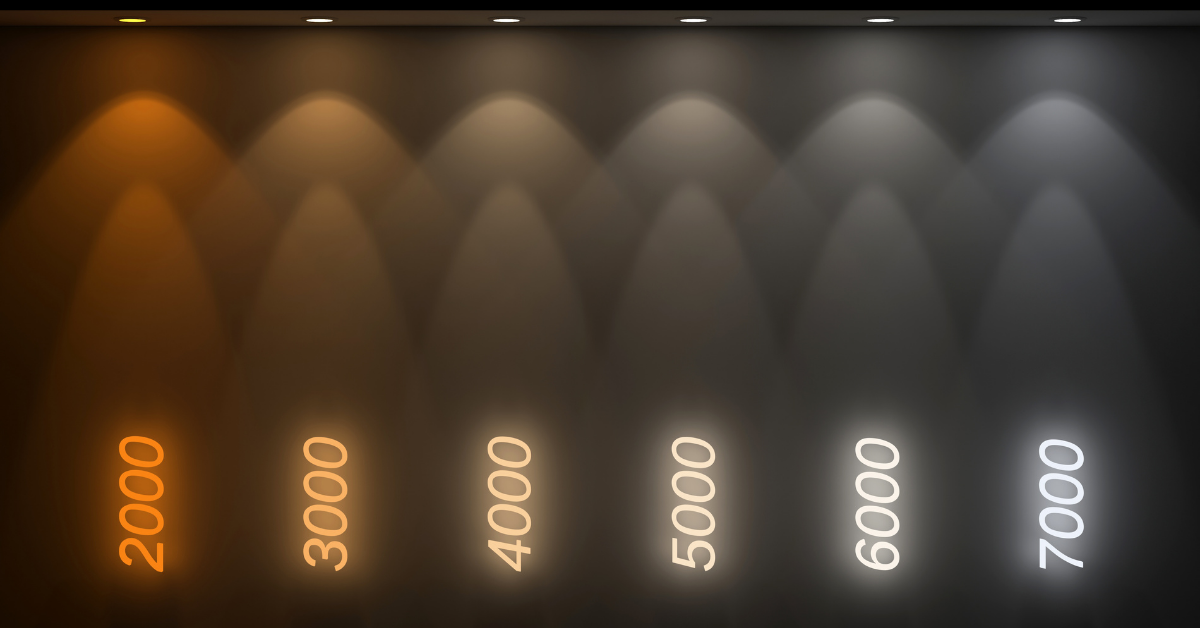
Bulb manufacturers use the Kelvin scale to measure the colour temperature on light bulbs. The warmth of candle light is around 1,500 Kelvin, with normal daylight somewhere between 5,000 and 7,000 Kelvin. The higher the Kelvin measure, the cooler the light temperature – and a cooler tone can seem brighter than a warmer tone.

If you’re looking for a bulb that gives off about the same colour as an old incandescent bulb, then you’ll want a bulb at approximately 2,700 Kelvin.


kelvin colour rendering for light bulbs


How Does Colour Rendering Affect Light?

Colour rendering is a way of measuring how well a light accurately shows different colours. For the most part, that won’t be too much of an issue, but if you’re displaying a piece of art with accent lighting or photographing items that you don’t want to have to correct the colour on, then you’ll want a bulb that has a measurement on the Colour Rendering Index of as near to 100 as possible.


Decide What Shape Is Best

While as long as you buy a bulb with the correct fixture, it will work, getting the correct shape of the bulb is important aesthetically. The type of shade you’re putting your bulb into will strongly influence the shape of the bulb that you need, especially if the shade or lighting fixture intentionally exposes the bulb for effect, or if you want to avoid it being seen, then you’ll need a smaller bulb.


Know The Long-Term Costs

While quality LED bulbs seem like they’re an investment when you buy them, but they really are the most energy efficient type of bulb available at the moment. When you consider that LED bulbs can last up to 25 years, that investment is well worth making, even just for the convenience of not having to change the bulb alone! When you compare the performance of an LED bulb with the cost of a traditional bulb, you’ll save more than £180 in energy through the product’s life span, so it is well worth the investment.


Final Thoughts

We hope that this post has helped you to understand light bulbs a bit more clearly, but if you’re still feeling confused about different types of light bulbs, don’t worry – you are not alone! With so many different types, and decisions to be made, it is not surprising that so many people still find it tricky to get the right bulb. Remembering to think about fitting, function, and format is a good place to start – but if you’re replacing an existing bulb, try to replace like with like. Should you have a bulb that you’re absolutely stuck with how to replace, then you can call us on 0345 646 1133, or email the technical team on technical@lyco.co.uk.

If you are looking for traditional bulbs, why not take a look at our extensive range of incandescent light bulbs? Alternatively, our full range of light bulbs includes energy saving and LED options to suit all your needs.


Looking for more news, inspiration, or advice? Try our Lighting Advice section.


charles author bio

Charles Barnett Managing Director

Charles started Lyco in 1995 with just 4 enthusiastic employees and has grown it considerably over the past 25 years. Charles is also the Managing Director of Lighting Direct and newly acquired Online Lighting. He now has a team of 50 lighting experts working on growing Lyco Group to be the UK leader in lighting for both businesses and homes. Away from the office he is a keen cyclist and is proud to have cycled 1017 miles from Lands End to John O’Groats to raise money for a new residential centre for adults with multiple learning difficulties.

Driveway Lighting Tips For Hospitality Venues

Driveway Lighting

A well-lit driveway can make guests feel truly welcome and safe as they arrive at your premises. As well as its practical benefits, lighting also has the ability to completely change the look and feel of a property’s entrance, delighting guests time after time. The following lighting tips can be applied to virtually any driveway or pathway.

Recessed ground lights

Ground lights by Lyco

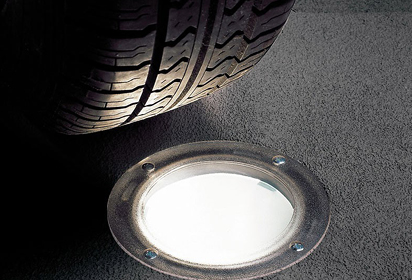
Recessed ground lights are a popular choice for driveways because they are versatile, unobtrusive, and easy to install – they also look great too. Recessed ground lights can either be positioned at regular intervals around the perimeter of a space, or used to highlight a specific entry route or pathway. When choosing ground lights, look for lights with an IP68 rating: This means the lights are totally protected against dust and water, and generally hardy enough to handle the worst of the British weather.

Post and bollard lights

Post and bollard lights from Lyco

Post and pedestal lights are useful for marking out the perimeter of a driveway or path to highlight the entry and exit routes. They generally sit best when positioned asymmetrically so as to avoid creating a runway effect. The good news is that these fixtures don’t typically become blocked by snow or leaf debris in the same way that recessed ground lighting might, but a possible downside is that they inevitably take up more physical space.

For these reasons, post lights work best in wide open spaces rather than tightly walled boundaries. Try positioning them on top of a wall at either side of the entrance, set on bends to make obstacles visible, including trees, walls, boulders or outdoor seats, or blend into garden shrubs and rockery for a decorative appearance.

Hanging decorative lights

Outdoor decorative lights by Lyco

If the entrance walkway is sheltered by tree branches, a canopy, or a pergola, hanging light fittings are a practical yet attractive solution, creating a glowing pool of light on the pathway or patio area below, and adding a dramatic appearance to the area. Similarly, a string of fairy lights, lanterns, or festoons hung above or along the length of a driveway or entrance can create a magical effect.

Wall-mounted motion-sensor lights

PIR Security lights by LycoWall-mounted lights with motion sensors can serve as a convenient driveway and pathway lighting solution, particularly when space on the ground is limited. These lights are generally most suitable within car parks and entrance ways. They will automatically turn on as a visitor approaches, distributing light only when it is needed before automatically turning off afterwards – conserving energy and keeping unnecessary illumination to a minimum.

Choosing the right light source for your premises

Solar driveway lighting

Solar lighting from Lyco

Since solar lights draw their energy from the sunlight, they don’t require an electrical supply to operate, which removes any running costs. And because solar lights don’t need to be plugged into a mains source, they can be positioned anywhere, and without needing an electrician. While direct sunlight will provide the best source of energy, most solar powered lights will run efficiently even during overcast spells of weather, albeit to a slightly lesser degree.

Electrical driveway lighting

Garden24 24 volt lighting by Lyco
Compared to solar lighting, electrical lighting offers far brighter illumination, and is typically more durable. Electric lights will also stay illuminated for as long as they’re switched on, while solar lights will require charging between use. We offer a range of 24volt outdoor lighting that doesn’t require an electrician to install, saving you hundreds of pounds. These cables don’t need to be buried and can be extended to include wall lights, ground lights and much more.

Planning lights for your driveway entrance

When planning outdoor driveway and entrance lighting, it is essential to identify potential hazards beforehand. Fixtures should be set along the driveway wherever there are obstacles and obstructions including trees, fences, walls, boulders, dipped and raised land or changes of direction.

In addition, lighting can be used to illuminate ponds, statues, and plants, but be aware that some plants will not survive well in constant bright light so it may be necessary to point the beam away from the leaves to prevent unwanted damage.

For further advice on any product or lighting project, please contact the friendly Lyco sales team here.

charles author bio

Charles Barnett Managing Director

Charles started Lyco in 1995 with just 4 enthusiastic employees and has grown it considerably over the past 25 years. Charles is also the Managing Director of Lighting Direct and newly acquired Online Lighting. He now has a team of 50 lighting experts working on growing Lyco Group to be the UK leader in lighting for both businesses and homes. Away from the office he is a keen cyclist and is proud to have cycled 1017 miles from Lands End to John O’Groats to raise money for a new residential centre for adults with multiple learning difficulties.

Planning Office Lighting and How to Make Yours More Productive

Office Lighting

The correct office lighting is a key component to creating bright and efficient workspaces. Get it right and things like work fatigue will be reduced while the performance and well-being of the workers who use the space will in turn, improve.

We are now working longer, more intense hours than ever before, so employers are increasingly being encouraged to create work spaces that positively impact their staff. The right lighting, at the right time, in the right place, can improve motivation, productivity, even support a more positive attitude for employees. It will really pay off to take time to consider and plan lighting carefully. A study by the Fraunhofer Institute for Industrial Engineering showed that in companies with a higher standard of interior design, productivity can increase up to 36%. Lighting can also play a vital role in a helping company’s reduce their energy and maintenance costs, so it pays to make informed decisions when it comes to lighting in office design.

In this article we are going to explore all aspects of office lighting in depth, covering the following areas:

Colour temperature explained

Lighting Colour Temperature

Rather than colours of the rainbow, colour temperatures simply refers to warm or cold light. Colour temperature is measured in units called kelvins and uses a scale that runs from warm to cold. The warmest temperature range is 2000k-3000k and this is used to create an ambient, welcoming atmosphere. Warm lighting is generally dimmer, and used in spaces intended for relaxation and rest. In an office this might be a break room, cafeteria or a reception area. Cooler lighting ranges from 3100K to 6500K and is much brighter and crisp, at the other end of the scale. Cooler lighting is better suited to areas where task lighting is needed, such as offices, garages or display areas. Often it is needed where focused tasks such as writing, working on a computer or drawing are to take place.

Desk area lighting

Using daylight to increase productivity

Daylight Lighting Colour Temperature

In an ideal world we would spend all our working time in abundant natural light. The perfect offices would have large windows that would allow natural light to flood in all day long. Sounds good doesn’t it, if a little impractical. Studies have shown that sitting close to a window in an office can have positive effects on employee satisfaction, so what is the ideal solution for offices without many windows? Mimicking natural light through artificial light, is the next best option.

Lighting Colour Temperature - Office - Desk Lighting

This can be achieved through the use of daylight coloured bulbs. Cool, daylight bulbs are a fantastic alternative to harsh fluorescent lighting that used to be common place in offices. We would recommend bulbs that are 5000K plus in colour temperature to try to replicate true daylight as closely as possible. Studies have shown that the light produced by daylight bulbs:

  • Helps prevent eyestrain
  • Improves alertness
  • Reduces fatigue
  • Enhances overall well-being and mood.

As well as improving performance during the day whilst at work, exposure to this bright type of light can also help you to sleep better. It stimulates the brain, and can even affect certain processes in your body such as blood pressure and heart rate. A lack of natural light can make us feel depressed, lethargic and lacking in energy, none of which make for a healthy working environment. These symptoms can be a contributing factor to workplace stress and burnout.

Cooler daylight can also be useful in areas where task lighting is needed. In an office this is required when intricate tasks are being done, or for areas where people use screens regularly. An important consideration with task lighting is making it adaptable for the individuals using it, so that it can be tailored to their needs. This could mean a desk lamp that can be angled, a floor lamp in an area of the office or over head lights that are operated by individual switches. It has been found that giving employees the opportunity to personalise and control lighting, can help them feel more satisfied at work and less stressed.

Brainstorming areas

Cool White Lighting Colour Temperature

If your office has a dedicated area or meeting room for brainstorms, pay close attention to the lighting. Choose lights that are too warm and employees might feel too relaxed to generate ideas. According to a study by the University of Greenwich, the use of light bulbs that emit cool light with a blue tinge (‘Blue Enriched’) that are around 3,700K, results in improved productivity and performance. This happens because this cooler light helps promote mental alertness, plus it reduces the production of melatonin, which makes us sleepy. It’s almost like thinking about the physical temperature of a room. It shouldn’t be too warm so people fall asleep but also not so cold that they’re shivering and can’t focus.

So, when considering the lighting in rooms for brainstorming, or where people are likely to sharing ideas, definitely opt for lights that have cooler coloured bulbs or better still, have the option for you to adjust the lighting yourself.

Depending on the type and size of your office or room, you may be looking for a range of different light fittings to plan your office lighting. In our offices here at Lyco we use Cool white LED panels. They provide cool light which helps office workers see well, especially when working on screens for much of the day. The bright light ensures eyes aren’t strained and their energy level stays high.

edit soft 90 led bar ceiling pendant

We have so many different options of lighting that we think would support your office, no matter its size. For example, why not consider track lights in meetings rooms with adjustable heads for focused lighting. They are easy to install and include energy saving LED bulbs for lower running and maintenance costs.

Finding the right lighting for meeting rooms

Meetings rooms are one of the hardest spaces to plan for in an office environment as they have lots of different uses. On one hand, you want them work as a space that encourages productivity, interaction and engagement during meetings or presentations. However, the space also needs to feel warm and welcoming to external visitors and clients who may also be visiting with you in your offices. They could be used for one-to-one meetings, or conversations of a sensitive nature, so you want lighting that will complement the mood and tone the space is being used for. We would recommend lighting temperatures between 3100K and 4500K which are bright but welcoming. The conference room, for example should have lighting that falls somewhere in the middle of the spectrum. Bright enough to keep people’s attention sparked and the ideas following, but warm enough to create intimacy and comfort at other times. There are various other ways to ensure meeting room lighting is flexible, for example by using dimmers, and adding wall lights which will add subtle background ambience.

Lighting Colour Temperature - Office - Desk Lighting

Smart lighting is becoming increasingly popular in meetings rooms and throughout offices, as it offers the flexibility to alter lighting easily. One minute a board meeting could be happening in there and the next, there could be a confidential conversation. Smart lighting offers the opportunity to adapt the lighting at the flick of a switch. Better still, employees can easily control and match the lighting to their own preferences as well as the tone of the meeting. This type of set up has huge potential to enhance employee satisfaction, as staff feel more empowered and in control of their working environment, which some studies have shown, can help companies retain their staff.

We stock a range of white changing LED bulbs that can be fitted to track light kits, and then controlled via phones or on a centralised dock. Track lighting is a great way to highlight seating areas around a desk, and as the individual heads can be angled, they can provide directional lighting for users.

Warm lighting in break out areas

Warm White Lighting Colour Temperature

We’ve talked lots about productivity so far, which we can all agree is important in an office setting. But what about when staff need to take well-earned breaks throughout the day, in order to have some down-time and unwind? They not only need space to break out but the lighting has to be fit for purpose in these spaces, too. The key to achieving a sense of balance is to separate the lighting in areas designed for people to work and for them to relax. Not only will this create distinct spaces for the two activities but it will amplify the results of bright white light in office areas and brainstorming rooms.

Lighting-colour-temperature-Break-room-lighting

So, what should the lighting be like in a break out area? Using ambient and warm lighting is key to creating spaces where staff can have some quiet time and switch off amongst the chaos of the working day. As well as comfortable furniture and soft furnishings, consider using floor lamps, wall lights and bulbs with colour temperatures between 2000K and 3000K. This will help to create a cosy and inviting atmosphere. We recommend selecting light fittings in neutral colours rather than anything too brightly coloured or eye-catching. This is so that they aren’t too distracting while people are reading, chatting or eating lunch.

The Newham light by Edit is a great option to achieve this as it will blend into neutral backgrounds well, but can also be painted a specific colour if needed. Wall lights are an ideal way to add warmth as they provide ambient lighting to rooms. They could work just as well in less formal meeting rooms as well as in break and staff rooms or reception areas.

LED Lighting

We are currently experiencing the real effects of climate change. So whatever you decide to do with your lighting, it’s vital now more than ever to invest in LED. Switch to LED and you will be helping to save the planet and making cost savings for your business right away. LED will improve energy efficiency up to 80% over older fluorescent lighting, which is undeniably positive for any business. And because they use a fraction of the energy, over time energy bills will reduce. LED bulbs far outlast fluorescent or halogen bulbs, with many of them having a considerable life span up to 50,000 hours. This means they will need to replaced far less frequently than their older equivalents. Eventually, it will lead to lower maintenance costs, too. These differences alone can repay the investment very quickly.

It is easy to see why converting your office lighting to LED makes business sense. But did you know LEDs can also improve the health and well-being of workers where they are used? They are the perfect option for lighting an office as they provide a brighter, clearer light compared to fluorescent tubes. These have a tendency to be harsh and overly bright. Studies have shown that LED lighting is much better for us in the long term.

  • It can improve our mood
  • Boost our energy levels
  • Help us avoid eye strain
  • Reduce levels of tiredness

An investment in LED lighting is a means to develop a healthy working environment in which people can thrive and succeed.

Searching for advice? Contact us today

At Lyco we stock thousands of LED office lighting options that are suitable for offices of all types and sizes. Whether your offices are modern, purpose-built premises or a converted barn, we have lighting solutions to cover all bases. Our experienced team are on hand to answer any queries or questions you might have about installations, refits, or upgrading lighting systems in offices and new premises. Simply call or email the team for free advice, support and specific recommendations based on your requirements.

Call us: 0345 646 1133
Email us: sales@lyco.co.uk

Alternatively, you can browse our key commercial lighting categories below:


Reena Reeves

Reena Reeves

Reena Reeves is writer and editor with 15 years’ experiencing working in publishing and digital media. She has a degree in Journalism and has worked for publications such as Smash Hits magazine, OK! Magazine and The Daily Express. Reena has been writing about lighting since early 2017 and has supported us with website copy, product descriptions and articles on lighting trends and commercial lighting solutions.

IP44 lighting for outdoors – our top 10

outdoor lighting

Whenever you’re looking to illuminate an outdoor space, IP44 lighting will usually provide an answer. The “IP44 rating” is something of a benchmark. The first of its two digits means the electrical enclosure is inaccessible to solid objects above 1mm in width. This is useful if you have children playing in a garden, as it effectively prevents anything from being prised into perilous areas. The second of the 4’s tells us the fitting is impervious to splashed water from any angle.

The IP44 rating is common in outdoor lighting. If you need to jet-clean the light fitting or immerse it in water you’ll need a greater level of protection, but for most purposes the IP44 specification will suffice. A lower IP43 rating is sometimes seen in outdoor lights, which is also rainproof but a little less protected against wild downpours and bouncing or deflected water.

Our Ten Best IP44 Outdoor Lights

Having established the IP44 rating as a reliable measure of weatherproofing, we’ll look at Lyco’s top IP44 lights in each of ten outdoor categories:

Outdoor Wall Light

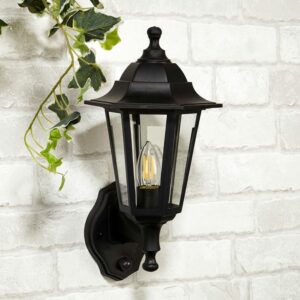
Outdoor wall lights can be decorative or functional. The IP44 rated Searchlight Coach Wall Lantern with built-in PIR Sensor ticks both boxes. This traditional fitting automatically triggers light when movement is detected within a 6m, 110° range. The PIR sensor can be overridden if required for manual operation.

View all Outdoor Wall Lights

Porch Lights

Lyco - Searchlight Brunel Outdoor Oval Flush Light - Stainless Steel

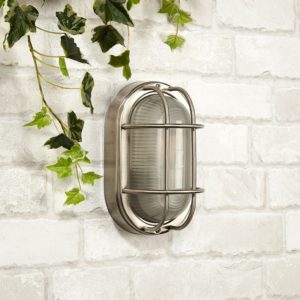
Porch lights are a popular way of brightening an entrance. The Searchlight Brunel has a classic style that’s ideal for various types of property. Its ridged opal glass diffuser is shielded by a steel cage and does a good job of cutting out glare. The slightly industrial look of this fitting is a popular modern choice.

View all Porch Lights

Plug and Play Lights

Techmar Ludeco - Alder LED Garden Spotlight

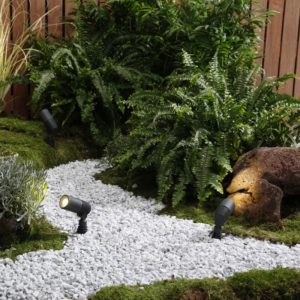
Plug and play lights offer a great way of designing an outdoor lighting scheme, without the need for any electrician to install it. The Alder Single Spotlight Extension consumes very little energy, thanks to its use of LED technology. This light can be easily added to the separately available 3-light kit, with no extra components required.

View all Plug and Play lights

Security Lights

Security lights are nothing if not functional, but the Lutec Shrimp LED Twin Floodlight excels itself for performance and practicality. Low priced without skimping on features, this 12W luminaire kicks out over 90 lumens of daylight light per watt and includes a PIR movement sensor with override facility.

View all Security lights

Decking Lights

Robus Garland SMD Cool White LED Walkover Lights - Set of 10

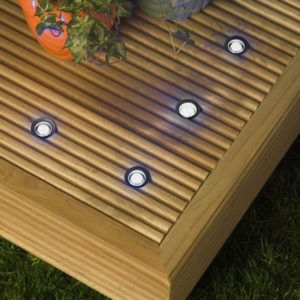
Decking lights add ambience to a decking area as well as an element of safety. The Robus Garland – Set of 10 are ideal for outlining decking edges and can easily withstand human weight. As a solid state technology that’s resistant to vibration and shock, LED lighting is perfect in this challenging role.

View all Decking lights

Solar Lights

Solar lights now exist in many forms, all made possible by modern LED technology. The Suri Rabat Solar Flush Light is great for any outdoor seating area. These lights are a perfect choice for wedding receptions.

View all Solar lights

Post and Bollards

Lucide Fedor Outdoor Short Bollard Light - Satin Chrome

Posts and bollards are useful for bordering paths and driveways, simultaneously lighting the way and showing off plants and shrubs. The Lucide Fedor Short Bollart Light is perfect for highlighting garden features such as rockeries. Consuming very little energy, this stylish IP44 rated luminaire adds ambience to any modern outdoor space.

View all Post and Bollard lights

Tile and Brick Lights

Edit Step Outdoor LED Wall Light - White

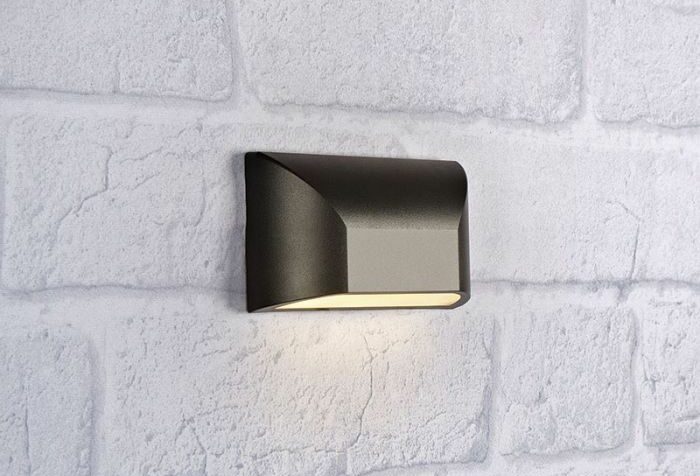
Tile and brick lights are difficult to beat as discreet forms of exterior lighting. The Edit Step slots directly into a brick cavity. This is an easy way of lighting paths alongside commercial or residential buildings, where there may not be room for freestanding or surface-mounted luminaires. A louvred version of the same fitting is available, which delivers an indirect light and cuts out glare.

View all Tile and Brick lights

Stake Lights

Eglo Solar LED Spotlight - Black

Stake lights offer a flexible solution to showing off garden features. The Eglo Solar LED Spotlight is particularly versatile, with an integral solar panel that allows great positioning freedom. A built-in dusk-to-dawn sensor automatically triggers overnight light, which can be overridden by manual control if required. Use this IP44 rated spotlight to accent grasses, plants, shrubs, statues, and other items of interest.

View all Spotlights lights

IP44 Lighting: British weather defence

For lighting that will always resist the British elements, you only need think of IP44. A detailed explanation of Ingress Protection ratings is available here: IP Ratings – The Definitive Guide.

For more advice and inspiration take a look at our Lighting Advice section.


andrew-author-bio

Andrew Evangelidis Head of Buying

Andrew is an experienced buying professional who takes an entrepreneurial approach to identify new lighting solutions and ensure Lyco have first-to-market ranges for our customers. Having previously worked for well known brands such as Wickes, Carphone Warehouse and Toys R Us, Andrew has now turned his hand to sourcing commercial lighting and ensure our customers receive top brand quality products at marketing leading prices. He manages a team of commercial and decorative buyers who travel the world finding new products that our customers don’t even know they need yet.

Dusk To Dawn Lights – More Than Just Lighting

Garden Spotlight

A built-in photocell is used in ‘dusk to dawn lights’ to automatically switch light on when darkness falls and off again at sunrise. Many such lights include a lux setting, so you can determine how dark it needs to be before they activate. Some have a manual override feature for regular on/off control. Dusk to dawn lights are not only convenient, but they also add an element of security to any home or business premises.

Automatic Lighting for Outdoor Spaces

Peace of mind lighting

Because dusk to dawn lighting operates automatically, it creates the illusion that a property might be occupied whether it is or not. That alone is enough to deter an opportunistic intruder while also bringing you peace of mind. Without any murky areas of concealment, criminals are always likely to move on to a more vulnerable target. If you combine dusk to dawn lights with a CCTV system, you should avoid most unwanted attention.

A welcoming sight

A business that operates late into the night such as a hotel, motel, or bar, wants the world to know its premises is open. Dusk to dawn lights let potential customers know you are there, at their service, and there’s no reliance on staff members switching light fittings on and off. The lights will routinely switch on exactly when visibility reduces, everyday, so that your business is always seen to its best advantage.

By choosing your dusk to dawn lights carefully, you’ll create a welcoming ambience that entices custom. The lights that attract customers will also discourage crooks. PIR lights are another useful deterrent against crime, startling any intruder with what is often a bright, stark light when it’s a modern floodlight. This is not desirable treatment for customers, but PIR floodlights can be used in areas not intended for public access such as back yards.

DIY CONNECTABLE EASYFIT LIGHTS

Plug and play outdoor lighting schemes are easy to design and surprisingly affordable. Because they use low voltage lights, they are entirely safe to install and require no electrician. Lyco sells an extensive range of Markslojd Easyfit 12 volt connectable lighting, including a diverse selection of products that can cater for most outdoor lighting needs.

The right lighting for the job

Using the right dusk to dawn lights for each location and purpose is vital for success, to either light a building for security purposes or show off a beautiful façade.

The Lutec Sunshine LED Solar Floodlight has a built in PIR Sensor and operates between dusk to dawn. This light is completely self-sufficient, recharging by day and switching on automatically at dusk.

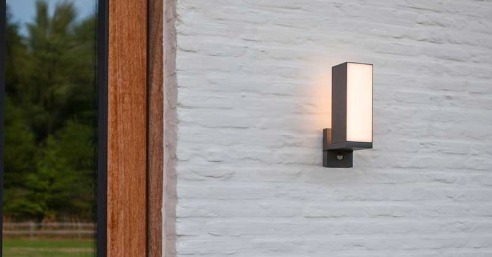
Wall lights can be part of your dusk to dawn lighting scheme, too. Lyco recommends the Caris Outdoor Wall Light for a modern doorway or patio area. This is another offering from Markslojd, a Swedish lighting company with a worldwide reputation for excellent outdoor luminaires and decorative bulbs.

For a traditional hospitality business or home, the lantern design remains a firm favourite. The Coach Wall Up Lantern from Edit adds a Dickensian feel to the outside of any premises, though there’s nothing Victorian about its light source. This fitting is designed to accept only low energy fluorescent bulbs, so it commits you to eco-friendliness.

A second solar lighting option is the set of four garden stake lights Martello by Suri. These are great for accenting garden features such as trees, shrubs, or statues. Best of all, they’re free to run & environmentally friendly!

Martello Outdoor Solar LED Stake Light - Brushed Stainless Steel - Set of 4


Lighting control

With dusk to dawn control you’ll benefit from great lighting every night, with no further action required. Remembering to switch lights on or off is no longer necessary: you’ll have a light sensor to do both at just the right times. A garden lighting scheme can be installed with little effort or expense if you plump for the plug and play option. Other fittings will usually need an electrician. Either way, you’ll soon see the benefits of dusk to dawn lighting, as will your customers.

Please browse our full range of Dusk To Dawn Lighting products to find exactly what you need. Our friendly sales team is always on hand to offer specific guidance.

If you’re looking for lighting news, inspiration or information, check out our Lighting Advice section.

charles author bio

Charles Barnett Managing Director

Charles started Lyco in 1995 with just 4 enthusiastic employees and has grown it considerably over the past 25 years. Charles is also the Managing Director of Lighting Direct and newly acquired Online Lighting. He now has a team of 50 lighting experts working on growing Lyco Group to be the UK leader in lighting for both businesses and homes. Away from the office he is a keen cyclist and is proud to have cycled 1017 miles from Lands End to John O’Groats to raise money for a new residential centre for adults with multiple learning difficulties.

Garage and Workshop Lighting Tips

Workshop Lighting

There are many different reasons for installing lighting in and around a garage or workshop. Whether it’s to improve security, help light up entrances, or allow the garage itself to be used regularly as a workshop or hobby space, there’s a solution for any lighting challenge.

Exterior lighting & security

Ensuring that you have appropriate lighting around the exterior of your garage is extremely important to help secure what is stored inside, as well as deter potential intruders from exploring other parts of your property. If you require a high level of security, for example to keep a car or expensive equipment safe, then high powered floodlights with integrated PIR motion sensors offer discouragement to would-be thieves. Additionally, if you are looking for an extra level of protection, floodlights with a built-in cameras are at the cutting edge of security; the Lutec Draco floodlight acts as both deterrent and detective, as it not includes a PIR motion sensor and a security camera, but also a speaker and microphone, allowing communication with whoever’s in shot via an app on your smartphone or tablet.

Dusk to dawn lights are another good option for improving security around a garage, and they look great too. These lights have built-in photocell sensors that will turn the lights on when darkness is detected, and off again at sunrise. As well as the added security benefits, dusk to dawn lights are very energy efficient, as the lights remain off during daylight hours ensuring that no energy is wasted unnecessarily.

Lighting the inside of a garage or workshop

Due to the fact that garages typically receive very little natural light, it is important to utilise bright downlighting throughout the space. LED battens are a great option here, as unlike traditional fluorescent tubes, they require no warm-up time, produce less heat (a welcome benefit when ventilation is limited), and can withstand more extreme conditions and temperatures.

Garages and workshops can often be exposed to high levels of moisture and dust, so when choosing lights it is important to take note of the IP rating. The Eterna Eco 64w LED Weatherproof Batten is a great choice. It has a high IP rating, whilst providing a bright, even spread of light. This fitting is also available in a wide range of sizes, making it suitable for most garages or workshops.

For anyone who spends a lot of time in their garage or workshop, having the right lighting for the task(s) at hand is critical – not just for being able to see properly, but also safely – particularly when power tools are involved. For carrying out detailed tasks, consider using desk lamps and spotlights to further illuminate specific work areas.

The way in which you use your garage will clearly affect the type of lighting you require – if you are using it simply for storage, then some simple battens should be fine. However, if it is somewhere you work and where you spend a lot of time, it is vital you take the time to perfectly plan your lighting layout.

If you’re still unsure on the best lighting solutions for your garage or workshop then please feel free to contact us today.

charles author bio

Charles Barnett Managing Director

Charles started Lyco in 1995 with just 4 enthusiastic employees and has grown it considerably over the past 25 years. Charles is also the Managing Director of Lighting Direct and newly acquired Online Lighting. He now has a team of 50 lighting experts working on growing Lyco Group to be the UK leader in lighting for both businesses and homes. Away from the office he is a keen cyclist and is proud to have cycled 1017 miles from Lands End to John O’Groats to raise money for a new residential centre for adults with multiple learning difficulties.