LED ceiling lights – our top 10

ceiling light LED panel

LED ceiling lights offer many benefits over fluorescent or incandescent alternatives. Aside from their incredible energy-efficiency and lifespan, the compact size of LEDs allows more flexibility in design. LED downlights and ceiling panels often fit into relatively shallow ceiling voids and are a cleaner, more hygienic lighting solution for hospitals, schools and offices. Surface-mounted fittings are also transformed in scope and performance by LED lamps.

At Lyco we keep a watchful eye on lighting innovation and trends and select only the best products for our customers. Here are our top 10 LED ceiling lights:

Ten top LED ceiling lights

Knightsbridge 5W Dimmable Fire Rated Downlight

This downlight offers a 25,000 hour lifespan and a 3-year manufacturer’s guarantee. Fire-rated, this downlight is tested for 90-minute ceilings, allowing crucial evacuation time for upper floors during a fire. Its impressive energy-efficiency easily surpasses the requirements of Part L Building Regulations.

Cavan 8W LED Downlight

Luceco 5W LED Downlight

To perfectly mimic the high quality light of a 50W low-voltage halogen equivalent, this superb downlight uses a special LED module with an 5W Sharp Cob LED chip. Its smooth, crisp light is delivered in a well-controlled beam with extremely low glare.

High Performance Downlight

There are two main differences between these two fittings. The first is longevity – the Sysion has a 50,000 hour lifespan against the 35,000 hours of the Cavan, so it’s ideal for long hours of use. The second is that it can be customised via interchangeable bezels and diffusers.

LED Light Panel

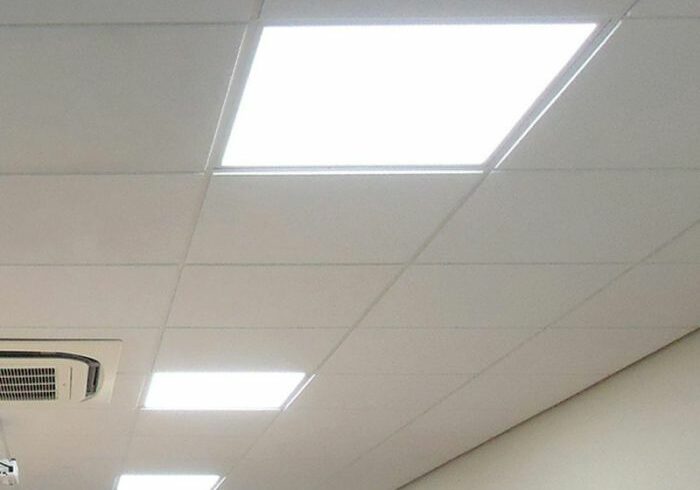
LED light panel - cool white

An improvement over old fluorescent modular ceiling fittings, this panel fits directly into existing ceiling grids. Its 50,000 hour lifespan and energy-efficient performance will significantly reduce maintenance and running costs. This is an ideal fitting for offices, schools, hospitals, and many other environments.

Rondure Pendant

Contemporary fittings like this Rondure pendant are often suspended low over dining tables or desks. This concentrates their light and creates a feeling of intimacy, even in a busy setting. A Decorative Filament Bulb is good for this purpose, as it’s attractive look complements the gold inner perfectly . The Rondure is ideal for restaurants, cafes, bars, or the home.

LED Batten

5ft Vulcan LED Twin Batten

LED lights offer a variety of extra benefits over even the best modern fluorescent tubes. This LED batten not only slices a third off the running costs of a T8 fluorescent tube, but it’s also longer-lasting, tougher, immune to multi-switching, contains no mercury and is suitable for exterior use. Need we say more?

Prodisc LED Flush Fitting with Microwave Motion Sensor

This excellent LED flush fitting automatically switches on when it detects movement. To add to its capabilities it can be wired to a series of slave fittings, so that multiple lights are switched on by the same sensor. With its cool white 5000K output, the Prodisc is ideal as a money-saving LED fitting in environments such as hospitals or schools.

Carina LED Flush with Microwave Sensor

The Carina is a great alternative to the Prodisc. With its IP65 rating, this dust-tight and water-resistant luminaire can be installed almost anywhere, including outdoors or in bathrooms and washrooms. The subtle warm white light of the Carina is ideal for hospitality settings and residential use.


Scorpius 4-Light Spotlight

Modern spotlight fittings such as the Scorpius often come with integrated LEDs, so you’ll get years of service before any replacement is required. The Scorpius is a ceiling bar with fully adjustable light heads. Because the beam of an LED carries no IR heat and little or no UV, it is better suited for lighting sensitive objects such as artworks or textiles.

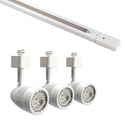
Acorn LED 3-Light and Track Kit

A track lighting system offers a little more versatility than a ceiling bar, as each light can be freely moved along a length of track as well as being angle-adjustable. The Acorn is ideal for lighting rooms and displays that are often altered. This light kit, which consists of 1-metre length of track and three spotlights, can be extended to a maximum 30 metres using separately available track lengths.

Investing in LED ceiling lights

Whether you’re an architect, interior designer, specifier, or end-user, LED ceiling lights deliver a new level of lighting performance whilst drastically reducing energy bills and the carbon footprint.

Why not take a look at our full range of LED ceiling lights?

Looking for more inspiration and advice? Take a look at our Lighting Advice section.

Charles Barnett Managing Director

Charles started Lyco in 1995 with just 4 enthusiastic employees and has grown it considerably over the past 25 years. Charles is also the Managing Director of Lighting Direct and newly acquired Online Lighting. He now has a team of 50 lighting experts working on growing Lyco Group to be the UK leader in lighting for both businesses and homes. Away from the office he is a keen cyclist and is proud to have cycled 1017 miles from Lands End to John O’Groats to raise money for a new residential centre for adults with multiple learning difficulties.

LED Lighting guide for dummies

Three decades ago, LEDs were only really known for being the power indicators on electronic devices, as they were too weak to be of much use elsewhere. Today, however, LED is leading the way in the fight to produce increasingly efficient lighting by dramatically reducing energy consumption.

The high-brightness blue LED was introduced in 1993. Twenty times brighter than its green or red predecessors, this was the long-awaited enabler of white LED light. Then, as now, white LED light was produced by blending red, green, and blue light or by using a blue LED with a yellow phosphor. From this point on LED bulbs started their journey to take over the world of lighting.

All very well, but what is an LED?

The real science bit…

A Light Emitting Diode (LED) is a device that allows electrical current to flow in only one direction. It includes two conductive materials, placed in contact with each other. Electricity is applied to the diode so that atoms in one material are excited to a higher energy level. That energy is then released in the form of electrons into the second material, and this release of energy creates light.

How does this differ from traditional lighting?

Traditional incandescent lighting produces light directly by heat. A thin tungsten filament is warmed to about 2500°C by an electric current. Filament bulbs use 90% of their energy in maintaining this extreme temperature.

LED benefits

LED lighting boasts numerous benefits over rival technologies:

  • Energy-efficiency: LED lighting offers energy savings of 80-90% over incandescent or halogen technologies and up to 50% over fluorescent lamps.
  • Longer life: with typical lifespans of up to 50,000 hours, LED lasts 2 or 3 times longer than fluorescent lighting, and up to 50 times longer than incandescent. Maintenance costs are vastly reduced as a result.
  • Instant light: unlike many fluorescent lights, LEDs require no warm-up time to reach full brightness.
  • Eco-friendly: LED lighting has potential to drastically reduce carbon emissions. Around 20% of the world’s electricity is used on lighting. Unlike fluorescent lamps, LEDs contain no mercury, making disposal easier and cleaner. Longer lifespan relieves pressure on landfill sites.
  • Reduced heat output: LED lighting has significant heat dissipation needs. However, unlike filament bulbs, an LED lamp does not project infrared heat in its beam. This increases suitability for lighting heat-sensitive items like artworks or food.
  • Added durability: LEDs are a solid state form of lighting, resistant to vibration and shock. They are less delicate than incandescent or fluorescent lamps, and outperform competing technologies in cold temperatures.

Retrofit LED bulbs such as this 5W GLS look almost identical to traditional bulbs

Can I replace existing lights with LEDs?

Retrofit LED bulbs (ones that fit into existing bulb holders) are suitable in most situations. Close attention should be paid to heat dissipation needs, especially when replacing halogen reflectors in enclosed light fittings (e.g. recessed ceiling light). Advanced heat sink design in modern LED lamps overcomes the reliability problems seen in early models. Manufacturer’s guarantees are often supplied to back this.

A few words about dimming

Take a look at our useful LED v Incandescent infographicLED lighting is excellent for dimming, maintaining energy efficiency at all light levels. However, not all LED lamps or fittings are dimmable. Dimmability is a property of the LED driver, so you need to shop specifically for it. Shop for dimmable LED bulbs

Many modern LED lamps are compatible with old dimmer switches, but the minimum load of a switch (often 60W) is a potential problem if you only want to dim a few lights. It is sometimes easier to install a new dimmer switch, with modern ‘trailing-edge’ dimmers being suitable for LED loads.

Dedicated LED fittings

LED light fittings are increasingly designed with non-replaceable LEDs, mainly due to their long LED lifespan. In this instance, the whole luminaire is replaced at the end of its useful life. One of the advantages is that designers can build light fittings that are fine-tuned for efficiency, with very little light being wasted.

Does the light from an LED reduce over time?

Yes, it’s a process called lumen depreciation, which affects LED and fluorescent lighting. Incandescent bulbs produce the same amount of light throughout their lifespan.

LED lifespan is usually measured to a point where it has lost 30% of original lumen output (known as 70% lumen maintenance, or L70). Lumens are used to measure the total amount of light produced, regardless of direction or beam angle.

Reducing carbon emissions

It is argued by scientists worldwide that we are heading towards potentially disastrous climate change due to excessive carbon emissions. The way we create and use our energy is all part of this equation and regardless of your stance, reducing your carbon footprint is definitely a positive way of doing your bit for the environment. You’ll be saving money at the same time!

A switch to LED – savings in a UK household

The average UK household effectively creates 10 tonnes (10,000 kg) of carbon dioxide per year. Electricity usage accounts for roughly a third of it.

If a household burns 6 x 60W filament bulbs for 4 hours a day, that amounts to 319 kg of carbon emissions a year. The annual energy cost will be around £70.

By comparison, 6 x 10W LED retrofits produce 54 kg of carbon dioxide per year and cost £11.50 in electricity. In one year, you’ve recovered most of the bulb costs and still have years of light ahead.

Since lighting accounts for 15% of the average home’s electricity bill, an LED conversion significantly reduces your carbon footprint.

<!—Switch to LED Comparison infographic—>

LED in summary

LED lighting is energy efficient, long-lived, eco-friendly, robust, and all-round cool (except around its heat sink). In addition, it produces little or no UV, is unaffected by frequent switching, is naturally directional for precise control, and it’s compact. LED is the future of lighting.

Why not start saving money (and the planet) today and take a look at our full range of LED lighting.

For more helpful guidance, inspiration and advice, take a look at our Lighting Advice section.

Charles Barnett Managing Director

Charles started Lyco in 1995 with just 4 enthusiastic employees and has grown it considerably over the past 25 years. Charles is also the Managing Director of Lighting Direct and newly acquired Online Lighting. He now has a team of 50 lighting experts working on growing Lyco Group to be the UK leader in lighting for both businesses and homes. Away from the office he is a keen cyclist and is proud to have cycled 1017 miles from Lands End to John O’Groats to raise money for a new residential centre for adults with multiple learning difficulties.

Decking Lights – adding that extra class

Decking lights are one of the most visually appealing and cost-effective ways to finish off any outside space – from your everyday domestic garden to larger commercial venues or hotels. But why not add an extra touch of class on top by installing some decking lights too? Lyco has a huge range of options to suit any project, from pin-sharp LED decking lights to powerful walkover lights, and you might be surprised at just how easy it is to install them too. Let’s take a closer look…

It’s easy to understand why decking is so popular these days: it’s an easy way of adding to your floor space, and serves as an natural link between indoor and outdoor areas, while the angular symmetry associated with decking and the rich colour and texture of the wood itself are undeniably easy on the eye.

Decking lights are ideal for taking full advantage of that visual appeal. By using multiple ground lights recessed into the wood itself rather than a single bright wall-mounted light source, you can bathe the area in a soft, elegant glow that makes the most of the aesthetic properties of wood itself.

Sound appealing? Then let’s check out some of the decking light options that are available, and the kind of settings they’re designed for.

LED deck lights

There’s nothing like LED lighting for a bit of discreet elegance. Available in white and blue, Lyco’s outdoor LED lights are not only weatherproof, but their sturdy construction ensures the LEDs themselves are well protected.

Simpson LED Walkover Lights: at just 25mm in diameter, this discreet lighting solution comes in a set of 10 LEDs. The lights themselves are sharp and crisp, and generate incredibly low levels of heat, so are perfectly safe to use near furniture, while IP65 weatherproofing and impact and vibration protection makes them ideal for hotels, restaurants and pubs.

Morris LED Walkover Lights - Set of 6 - WhiteMorris LED Walkover Lights – Set of 6 – White: bigger and brighter than the Simpson LEDs and also available in blue and white options, the Morris LED Walkover Lights offer the same weather-proofing, efficiency and low running temperature in a larger package. Sold in sets of six lights, this Walkover Lights package comes with 2m of cable for each light, plus a 4m power cable.

Plug and Play

The whole point behind Plug and Play lighting is to make installing outdoor lights so easy that anyone can do it, and so Plug and Play decking lights are perfect for domestic decking projects. That doesn’t mean you can’t be ambitious, though: Plug and Play systems are easily scalable too, and you can mix and match different types of lights on the same system without hassle.

Umbra Halogen Ground Light: with its 115mm diameter and 20W halogen bulb, the Umbra ground light is perfectly capable of getting the job done on its own. But that would be a waste of Plug and Play. Combine it with other Garden Lights products, or indeed any Plug and Play-compatible lighting product, and you’ll have enough light for any decking project, small or large.Hybra LED Deck Lights

Hybra White LED Deck Light: give your decking project an injection of style with the attractive Plug and Play-compatible Hybra White LED Ground Light. The stainless steel body and transparent polycarbonate diffuser will be sure to turn heads, and come with IP44 weather-proofing and a three-year guarantee.

Astrum White LED Deck Light: think decking lights and you automatically think ground-based, but this versatile Astrum White LED light is just as effective mounted in gates and posts. Best of all, it’s Plug and Play compatible, so can easily be incorporated into an existing lighting setup without hassle.

Walkover lights

All outdoor lights have to be durable to some extent, but walkover lights are actually designed to be walked on (and in some cases even driven over), and are strong enough and weather-resistant enough to handle it. Many even offer IP67-rated protection, which means they can be placed up to 1m underwater – perfect for larger-scale decking projects such as hotel or restaurant exteriors.

Garland LED Walkover Lights: these IP68-rated lights are all about versatility: by incorporating a connector lead and transformer you can set up your lighting system just how you want it.Garland LED Walkover Lights (Set of 10)

Garden 24V LED Deck Lights Set: another versatile performer, they come in packs of three and can be added to with individual lights. Whilst arguably not quite in the same league as the Garland lights, they are nonetheless great all-purpose low-voltage walkover lights.

Decking for all

There’s no question that decking can add value and versatility to any property, whether domestic or commercial, and hopefully this guide has helped illuminate just how integral lighting can be to any decking project. The good news is you’re not lacking for choice, and innovations like Plug and Play have put impressive results within the reach of the beginner without compromising what can be achieved by more ambitious projects.

Take a look at our full range of decking lights.

Looking for more lighting resources or ideas? Try our Lighting Advice section.

Charles Barnett Managing Director

Charles started Lyco in 1995 with just 4 enthusiastic employees and has grown it considerably over the past 25 years. Charles is also the Managing Director of Lighting Direct and newly acquired Online Lighting. He now has a team of 50 lighting experts working on growing Lyco Group to be the UK leader in lighting for both businesses and homes. Away from the office he is a keen cyclist and is proud to have cycled 1017 miles from Lands End to John O’Groats to raise money for a new residential centre for adults with multiple learning difficulties.

Simple guide to converting your lighting to LED

There’s never been a better time to convert your lighting to the very latest LED technology. The great news is that the price of LED bulbs has fallen drastically whilst the quality has got better and better.  Also LED bulbs use up to 90% less energy than regular bulbs and last up to 50 times longer.  It’s a real win, win!

After almost 20 years in lighting we like to think of ourselves as your Lighting Experts. We understand all lighting including LED. We have already helped 1000s of customers convert to LED with little or no inconvenience along the way so why not let us help you?

Here is our step-by-step guide to saving ££££s on your ever increasing energy bills:

Step 1 – Survey

Call us and we can help you undertake a simple survey of your premises. This can probably be carried out over the phone but otherwise we might need to visit your premises and carry out an on-site survey. From this we can produce a quick report and show you the savings that can be made by switching to LED.

Step 2 – Product Selection

We will make suggestions as to the best products that will meet your needs. We will take into consideration such things as light level requirements, dimming and use in order to recommend the optimum products. We offer LED from the major manufacturers and will always offer you the best option, not the most expensive!

Step 3 – The Plan

Depending on the size of your premises we will help you devise a plan to convert your lighting. We will help you look for the ‘quick wins’ and assist with testing and installing. We will make sure all the items you require are delivered before you are ready to start the installation.

Step 4 – Installation

We can offer a full installation service or we can guide you or your maintenance team through the installation process. Whether you are using us to install your lighting or not, we will always be there to ‘hold your hand’ through the entire process.

Step 5 – Start Saving

As soon as you have switched to LED you will start saving money.  Depending on the size of your building you could see a return on your original cost in as little as 6 months.

Start the switch today!

We make it sound simple because with the right help switching to LED lighting is! If you have any questions, don’t hesitate to drop us a line or give us a call. We’ll be more than happy to offer some sound advice and start you on the path to improving your lighting efficiency, whilst saving you money at the same time.

If you would like to find out what sort of savings you can make by converting to LED take a look at our ‘How much will I save’ article.

For more advice, inspiration and news take a look at our Lighting Advice section.

Charles Barnett Managing Director

Charles started Lyco in 1995 with just 4 enthusiastic employees and has grown it considerably over the past 25 years. Charles is also the Managing Director of Lighting Direct and newly acquired Online Lighting. He now has a team of 50 lighting experts working on growing Lyco Group to be the UK leader in lighting for both businesses and homes. Away from the office he is a keen cyclist and is proud to have cycled 1017 miles from Lands End to John O’Groats to raise money for a new residential centre for adults with multiple learning difficulties.

Adding helpful energy labelling information, the EU way…

Adding Helpful Energy Labelling Information, The EU Way…

As you may be aware the latest batch of EU regulations 874/2012, specific to the labelling of electrical lamps and luminaires, have now come into force.

These regulations are aimed specifically at offline lighting businesses. However, in the interest of providing our customers with as much useful information as possible to allow them to make an informed choice, Lyco will be displaying these labels online alongside relevant products where available.

Energy efficiency labels

An example of energy efficient labelling for light fittings and bulbsThe labels themselves are a guide to show you what type of bulb is suitable to be used in a particular fitting, allowing you to choose the efficiency rating to suit your preference / requirement.
These labels are already used on white and brown goods (kitchen appliances, TVs, etc) and are only relevant to domestic light fittings. Commercial fittings such as emergency lighting and fluorescents are currently excluded from this labelling requirement.

Commitment to quality

The requirement for this labelling is only on new products on sale from the 1st March 2014 but we will endeavour to add an labels available to any products which were on sale prior to this legislation as part of our on-going commitment to providing the best quality of information available to our customers.

If you have any further queries about this labelling please do not hesitate to contact our customer services, who will be happy to help.

Looking for more news, information and inspiration? Try our Lighting Advice section.

Charles Barnett Managing Director

Charles started Lyco in 1995 with just 4 enthusiastic employees and has grown it considerably over the past 25 years. Charles is also the Managing Director of Lighting Direct and newly acquired Online Lighting. He now has a team of 50 lighting experts working on growing Lyco Group to be the UK leader in lighting for both businesses and homes. Away from the office he is a keen cyclist and is proud to have cycled 1017 miles from Lands End to John O’Groats to raise money for a new residential centre for adults with multiple learning difficulties.

What is a squirrel cage bulb?

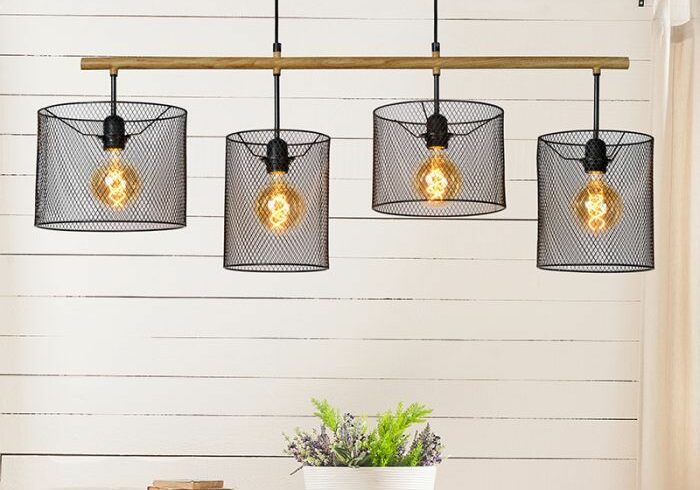
Lucide Baskett 4 Light Bar Ceiling Pendant - Black

Most of us are familiar with the classic pear-shaped household bulb, but what is a squirrel cage bulb? These bulbs appeared in the earliest years of the 20th century, when lighting companies were competing to develop metal filaments. The carbon or metal filament was threaded up and down using support hooks until it resembled a squirrel cage, hence the name.

Back in fashion – the attraction

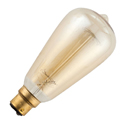
35W Calex Goldline Rustic Bulb with bayonet cap fitting

Today, squirrel cage bulbs are making a comeback, with increasing popularity in restaurants, bars, and homes. Still using the classic 100-year-old design (including the dimple of blown glass) these bulbs are mesmerising to look at. Their warm-glowing filaments have a calming effect similar to a traditional wax candle, or fireplace.

Lyco sell a selection of squirrel cage bulbs in either E27 Edison Screw or B22 bayonet cap fittings. One notable thing about these bulbs is their 2000K colour temperature. This is warmer in hue than standard 2700K incandescent lamps, which helps in creating a restful mood. To emphasise their fireside effect, some models also have gold-tinted glass.

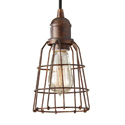
Urban Renewal Bronze Pendant Light

Choosing the right fitting

An often ignored aspect of choosing a light fitting is the type of bulb to be used. The perfect foil for a decorative bulb can only be an open or clear-finished fitting. The Ricky Ceiling Pendant is ideal for a squirrel cage bulb, and makes a great choice of ceiling light for stylish restaurants and bars.

The Edit Crate 4 Light Bar Pendant acts as the perfect bulb-display cabinet. This modern statement light is ideal for showing off squirrel cage bulbs, and is stunning over a kitchen island or counter. The warmth of light and gorgeous-looking bulbs will set the scene for intimate meals or midnight snacks.

Back to the future

In recent years, comparatively new technologies such as LED have forever changed artificial lighting. However, there’s still demand for the high-quality light of a filament bulb. Most incandescent bulbs have been phased out by EU legislation for their inefficiency, but the squirrel cage bulb has returned. This bewitching lamp delivers light from a bygone age, and reminds us that not everything is lost.

Looking for more answers or advice? Try our Lighting Advice section.


Charles Barnett Managing Director

Charles started Lyco in 1995 with just 4 enthusiastic employees and has grown it considerably over the past 25 years. Charles is also the Managing Director of Lighting Direct and newly acquired Online Lighting. He now has a team of 50 lighting experts working on growing Lyco Group to be the UK leader in lighting for both businesses and homes. Away from the office he is a keen cyclist and is proud to have cycled 1017 miles from Lands End to John O’Groats to raise money for a new residential centre for adults with multiple learning difficulties.

Top 10 LED light fittings – the market leaders

Anyone who is faced with the task of updating the lighting in a building, whether it involves the entire premises or just certain parts, need to be looking seriously at LED lighting. LED is far superior to any of its predecessors in so many ways. Whether you are an architect, designer or electrician the message is still the same.

Designers of offices can now provide work places that are not only more people friendly because of the modern lighting but, thanks to the availability of LED fittings, are far more economical to run. LED probably represents the greatest advance in lighting technology since the fluorescent tube.

LED is the number one choice

For any new installation LED lights are the number one choice for a number of reasons. First there’s the economy in operation. LED units have a life expectancy of up to 100,000 hours, that’s 11 years if left on continuously or 22 years if only on half of the day every day. Because LEDs are 80 to 90% efficient compared to traditional incandescent bulbs’ 20%, 80% plus of the electricity used produces light. That means LEDs use far less energy to produce an equivalent level of light. LEDs work well on low voltage systems too, which brings benefits for safety as well as economy.

Less is more

The environment benefits from the absence of any toxic materials in LED units and of course their long life means that less energy is consumed producing them. Virtually no UV light is produced by LEDs and very little infra red which means practically no radiated heat which is much kinder to pictures or ancient artefacts. It’s better for people too!

Hardy lighting animals

LEDs are extremely robust with no glass used in their construction which makes them ideal for situations where lights can lead a tough life. Their compactness gives designers unprecedented flexibility in positioning lights where they can be most effective. LEDs can focus light for best effect and are not troubled by extremes of temperature. They switch on and off instantly too.

The market leading LED lights

Now the case for LED has been proven let’s take a look at the market leaders in LED lighting….

Indoor LED light fittings

Lyco’s top ten LED light fittings, start indoor with the neat, LED Emergency Bulkhead light. Its slim and compact design means it needs very little space and its robust polycarbonate construction will withstand the inevitable knocks. It can also be used with remote switching.

Next, another emergency light, this time the 3W LED Compact Emergency Downlight which comes pre-wired for easy installation in a ceiling. This light needs no maintenance and is available in white. It’s LED glows a discreet green when on standby then, in the event of failure of the mains lighting, it comes on automatically giving a bright white light.

Prodisc LED Flush Light Fitting with Motion SensorThe Carina LED fitting can be what you want it to be! It can be a standard LED flush fitting ceiling light operated by a normal switch or it can incorporate a microwave movement sensor to come on when movement is detected. The microwave sensor can even see through doors and turn on the light in a room as someone approaches the closed door. The Carina can also be installed as a maintained or non-maintained emergency light. Both microwave sensor and emergency facility can be combined in one lamp. One such unit can be linked to as many as four standard basic lamps and allowing you to control all of them together.

Acorn LED Track Lighting Kit (includes 3 lights) - White
For track mounted lights Lyco offers the Acorn LED 3 Light and Track Kit in a white finish . You get a metre of track and three spotlights fitted with LED bulbs. You can have Halogen GU10 bulbs if you prefer. If one metre of track is not enough for your project you can extend the kit with extra tracks and spotlights right up to 30 metres of track. The maximum number of spotlights per metre of track is four. An inline connector is needed for each track connection. Each spotlight head can rotate through 360˚ to point where you want it to and can tilt through 90˚.

For the bedside table, Edit Hotel Reading Light  not only looks elegant but combines a bedside lamp with an LED snake neck reading light with separate switches for each. Style is neatly combined with convenience.

Top Outdoor LED fittings

Moving outdoors LEDs are very much in their element with their robust construction. IP44 rated, the Short Stainless Steel Post Light is protected against both dust and splashing water to accommodate the vagaries of our British weather. It is 450mm tall, made from stainless steel with a transparent diffuser. You get a 2 year guarantee against corrosion so it is ideal for outdoor installation more than fifteen miles inland from the coast. Nearer to the coast than that and you really should choose copper or galvanised steel products rather than stainless steel (see our coastal lighting article for more information).

Take a closer look at the Ground or Wall-mountable - GL7- LED Spotlight - Warm-WhiteStill in the great outdoors, another great light fitting for the garden is this Garden Spotlight. It can be fitted to a vertical surface or on the ground. Its IP65 rating means it is well protected against heavy rain and dust. It is great for lighting up a water feature but should not be submergedn. The tough lacquered aluminium casing makes this a very durable outdoor light.

Outdoor lighting includes security lighting and for this purpose you can’t do better than the Lutec Draco as it has all you need… PIR controlled floodlight, security camera with speaker controlled by the Lutec Connect App. When the PIR is activated the camera takes clear images, recorded straight to the app and the light is bright enough to ensure that even at night the images are clear and in true colours. All the settings are fully adjustable and all the sensitive parts are fully protected against the elements.

If the camera and recording facilities are not required, a lower cost alternative would be the Lyco 50W Cool White LED Floodlight. One of Lyco’s most popular security lights, its superb quality Nichia LEDs are renowned for their high output, reliability and amazingly long life.

The number one LED light fitting is…

Fireguard LED6 Dimmable SpotlightFinally the top selling LED light fitting which really is lighting the way to LED dominance in the lighting market is the EvoFire Downlight. We’re back indoors for this one, it’s a ceiling fitted flush downlight. It meets part B of current building regulations being fully tested and fire rated for 30, 60 and 90 minute ceilings. It is equally suitable for commercial applications of all kinds as well as domestic use.
The IP65 rating of the Evofire Downlighters means they are suitable for use in bathroom zone 1. The fire resistant bezel ensures that they are ideal for retro fitting as replacements for other, older downlighters.


For more advice, inspiration and news take a look at our Lighting Advice section.


Charles Barnett Managing Director

Charles started Lyco in 1995 with just 4 enthusiastic employees and has grown it considerably over the past 25 years. Charles is also the Managing Director of Lighting Direct and newly acquired Online Lighting. He now has a team of 50 lighting experts working on growing Lyco Group to be the UK leader in lighting for both businesses and homes. Away from the office he is a keen cyclist and is proud to have cycled 1017 miles from Lands End to John O’Groats to raise money for a new residential centre for adults with multiple learning difficulties.

LED lighting – an introduction

LED lighting is the most energy efficient form of lighting around today. An LED, or ‘Light Emitting Diode’, uses the movement of electrons through a semiconductor material to create light. Most LED lighting combines a high-brightness blue LED with a yellow phosphor, which acts like a filter to create white light.

LED Lighting: From concept to creation

The blending of blue and yellow light to create white light was first noticed by Sir Isaac Newton in the early 1700s. Almost 300 years later, the 1990s invention of the blue LED by Shuji Nakamura unlocked the possibility of white LED lighting, which has become one of the greatest technologies of the early 21st century.

Benefits of LED

  • LED bulbs and luminaires have exceptionally long lifespans, with manufacturers quoting up to 30,000 to 75,000 hours. By comparison, CFLs and fluorescent tubes are typically rated at about 6,000 to 15,000 hours and halogen lamps at 2,000 hours.
  • LED light bulbs radiate minimal IR or UV light, either of which can damage artworks and other display items by heat damage and fading.
  • An LED lamp is always vastly more energy efficient than any incandescent or halogen equivalent, and usually more energy-efficient than fluorescent.
  • LED lights are particularly resistant to damage by shock or vibration. This is not true of incandescent or fluorescent light sources.
  • LEDs are small, which allows great design freedom for lighting designers, and makes it easy to produce retrofitting lamps.
  • Being relatively cool-running, LEDs do not raise room temperatures and create a need for air-conditioning to be utilised (cooling rooms generally costs more than heating them).
  • LED bulbs offer the user a choice of colour temperature (warm white, white, cool white), meaning you can tailor your lighting for a particular application.

Identifying the right LED bulbs

Many people new to LED lighting will be converting from halogen or incandescent and wondering what to look for when replacing their existing lamps. Lyco usually quote an equivalent in terms of wattage (halogen for spotlights, incandescent for general lighting). For example, 5W=50W might refer to a 5W LED GU10 spotlight with the light output of a 50W halogen equivalent.

Buying LED – FAQs

Is LED bright enough?

Already LED lighting is used in car headlamps and street lighting. It is suitable for many applications where inefficient lighting has previously been the only option, and its versatility will only increase as lumens-per-watt performance goes up.

Are LED lights dimmable?

Many are, though you should take care to pair them with a high quality LED-compatible dimmer switch.

How is LED lifespan measured?

Because LED lifespan is so long, it is calculated using limited data from a large sample selection. The end of an LED’s life is widely accepted as the point of 70% lumen maintenance (when it has lost 30% of its original output), though the benchmark used varies between manufacturers and is not always quoted.

How good is LED colour?

LED bulbs have a minimum CRI 80 rating for colour rendering, which is a good quality for most purposes. Historically, the discontinuous spectrum of LED made it less dependable for colour-critical applications than an incandescent light source but that is a thing of the past. Already there are CRI 90+ products on the market and LEDs are expected to improve further in the very near future.

Benchmark LED products

Its always handy to know what are the best or most popular products are when looking to buy. With this in mind we provide a regularly updated list of the most popular LED light fittings. Being constantly maintained, these articles should always prove to be a great source of reference.


Why not browse our extensive LED range including LED bulbs and fittings?

Want to know more about lighting or looking for inspiration? Try our Lighting Advice section.

Charles Barnett Managing Director

Charles started Lyco in 1995 with just 4 enthusiastic employees and has grown it considerably over the past 25 years. Charles is also the Managing Director of Lighting Direct and newly acquired Online Lighting. He now has a team of 50 lighting experts working on growing Lyco Group to be the UK leader in lighting for both businesses and homes. Away from the office he is a keen cyclist and is proud to have cycled 1017 miles from Lands End to John O’Groats to raise money for a new residential centre for adults with multiple learning difficulties.

Lumen, Lux & Candela – an introduction

Lumen (lm), lux (lx) and candela (cd) are units of measurement used to describe the output of bulbs and light fittings. With incandescent and halogen lighting it was always easy to equate wattage with light output, because the same wattage always produced the same amount of light.

Now that different technologies have entered into the equation, using wattage as an indicator of output has become increasingly obsolete. In retrofit CFLs or LEDs, and even energy-saving halogen lamps, an equivalent incandescent or halogen wattage is given by manufacturers to make life easier.

Like-for-like comparisons between modern light sources are complex, since their output per watt varies considerably from one product to the next. Therefore, more universal units of measurement are required – measurements that actually record light.

Lumen, lux, and candela are definable as follows:

Lumen (Lm)

Lumens measure the total amount of light energy from any source, regardless of direction. The lumen answers a simple question: how much light does this source produce?

When buying modern bulbs you’ll find the lumen measurement added to the packaging and stated prominently – usually at twice the size of the wattage.

Lumens are used to measure energy efficiency, using a lumens-per-watt formula. In the lighting industry this formula is called ‘luminous efficacy’. Efficacy refers to a ratio between two different units of measurement.

Sometimes lighting manufacturers give a ‘LOR’ measurement (Light Output Ratio), which accounts for the percentage of light in lumens wasted between the source and transmission through a light fitting.

A guide to the energy efficiency (or luminous efficacy) of various technologies is as follows:

Lux (Lx)

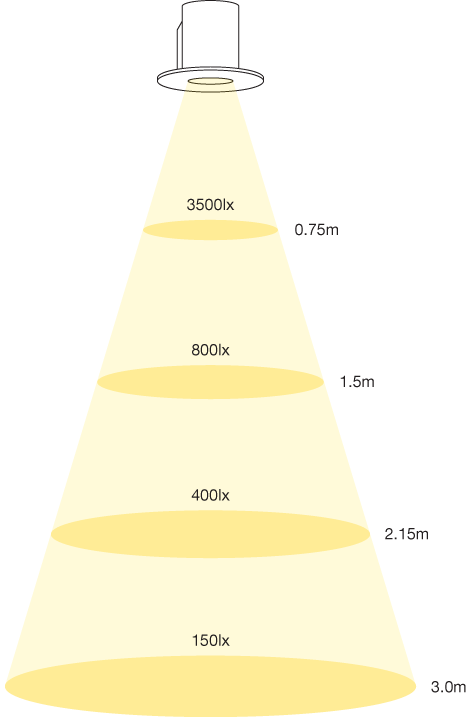
Lux is a unit of illuminance equivalent to 1 lumen per square metre. It is a measurement given in conjunction with distance, or a set of incremental distances, so that end-users can gauge whether a lamp or luminaire delivers an adequate intensity of light for specific applications, or to meet building regulations. For instance, corridors are often required to measure a minimum 100 lux at floor level (typical height around 3m), and 300-500 lux is recommended for reading.

The Lux measurement is normally used with products that have a fixed spread of light (beam angle) such as GU10 bulbs or downlights.

The illustration below shows an example of decreasing light levels over distance: 0.75m = 3500lx, 1.5m = 800lx, 2.15m = 400lx, and 3m = 150lx.
A diagram explaining how Lux works

Candela (Cd)

Candela is a measurement of luminous intensity at source, and in a given direction. One candela is the approximate equivalent in output of a traditional candle. A candela measurement differs from lumens in that it measures directional intensity rather than the overall amount of light, so it takes no account of multidirectional output. For that reason candelas are used primarily to measure focused lamps, such as spotlights.

For more information, advice and ideas take a look at our Lighting Advice section.

Charles Barnett Managing Director

Charles started Lyco in 1995 with just 4 enthusiastic employees and has grown it considerably over the past 25 years. Charles is also the Managing Director of Lighting Direct and newly acquired Online Lighting. He now has a team of 50 lighting experts working on growing Lyco Group to be the UK leader in lighting for both businesses and homes. Away from the office he is a keen cyclist and is proud to have cycled 1017 miles from Lands End to John O’Groats to raise money for a new residential centre for adults with multiple learning difficulties.