Bathroom Zones – What Can Go Where

Bathroom Lighting

Before any lighting installations are carried out in bathrooms it is essential to understand the significance of bathroom zones, as set out in the electrical safety regulations. These bathroom zones are designed to ensure that only bathroom lights provided with appropriate protection are used, especially within the higher risk areas so that the risk of harm is avoided.

Looking for Bathroom Lighting? View our full range >

IP Ratings

Like other electrical equipment, light fittings are given an IP Rating to indicate their suitability for a particular environment. IP stands for ingress protection and the rating consists of the letters IP followed by a two digit number. The first number indicates the level of protection provided against intrusion by solid objects such as dirt or dust. The second digit indicates the level of protection against various degrees of moisture. For a more in-depth explanation of IP Ratings take a look at our definitive guide to IP Ratings.

Looking for Bathroom Downlights? View our full range >

Bathroom Zones Explained

Bathroom zones are best described with reference to illustrations but the measurements stated are quite specific and must be adhered to. What follows should help with understanding what grade of fittings can be placed in the different bathroom zones and the reasons why. It is only a guide and such work should always be carried out by a qualified electrician who will be conversant with the IEE Wiring Regulations (17th Edition).

As you can see the illustration below shows a bath, wash basin and a stand-alone shower installation. If any of them are combined or their respective zones overlap then the higher risk level should be applied.
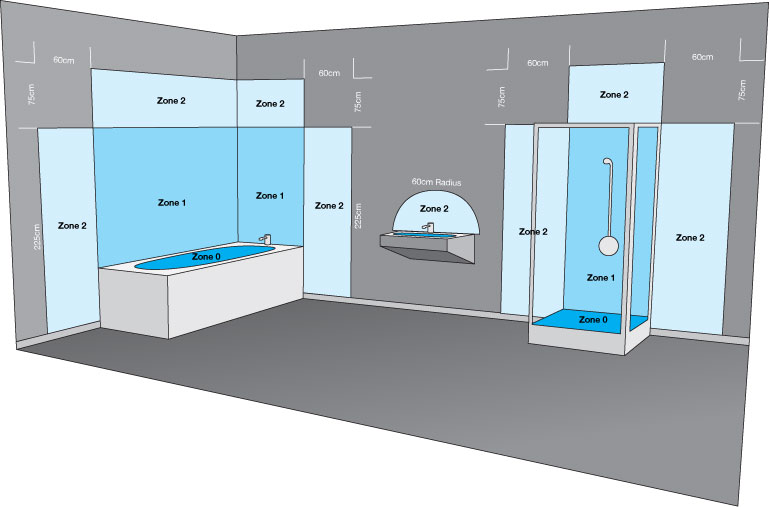
Bathroom Zones explained

As you can see the illustrations show four distinct bathroom zones, 0, 1, 2 and 3 (referred to in the key as “Outside Zones”).

Bathroom Zone 0

Zone 0 is inside the bath or the shower tray itself. If lighting is required in there, any fitting used must use a low voltage supply, that is a maximum of 12v and also be rated at least IPx7 which means it is totally immersion proof.

Bathroom Zone 1

Zone 1 is the area above the bath or shower tray to a height of 2.25m from the floor. Any fitting used in this zone must have a minimum rating of IPx4* , which means it is protected against water spray from all directions. If the fitting uses a 240v supply, a 30ma residual current device (RCD) must also be used to protect the circuit in this zone.

Bathroom Zone 2

Zone 2 is an area stretching 0.6m outside the perimeter of the bath and to a height of 2.25m from the floor. In this zone again an IP rating of at least IPx4* is required. It is good practice to regard the area around a wash basin, within a 60cm radius of any tap as zone 2.

Bathroom Zone 3 (Outside Zones)

Zone 3 is anywhere outside zones 0, 1 and 2 (subject to specific limits) and where no water jet is likely to be used. No IP rating* is required in these areas.

*If there is any likelihood of water jets ever being used for cleaning purposes in Zones 1,2 and Outside Zones, fittings rated a minimum IPx5 must be used which tells you that the fitting is protected against water jets.

The latest edition of the IEE wiring Regulations will provide more detailed information but your electrician should be fully up to date with these.

Suitable Suggested Products

When it comes to selecting the actual fittings to go into the different bathroom zones there are plenty to choose from in our Bathroom Lighting category.

Need Further Advice?

The information provided in this guide should help you to understand the requirements for bathroom lighting and the meaning of bathroom zones. When you discuss your requirements with your electrician you should now feel able to do so with greater confidence than you may have felt before.

If you have any further questions please don’t hesitate to get in touch:

  • Call us: 0345 6461142
  • Email us: sales@lyco.co.uk

Why not take a look at our full range of Bathroom Lighting?

For more inspiration and advice try our Lighting Advice section.

Where Next?
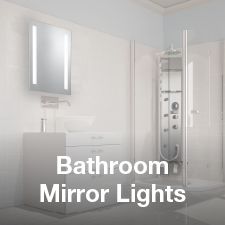
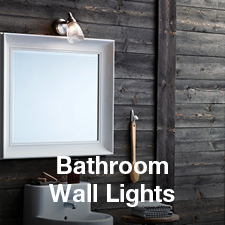
Bathroom Ceiling Lights Bathroom Mirror Lights Bathroom Wall Lights


charles author bio

Charles Barnett Managing Director

Charles started Lyco in 1995 with just 4 enthusiastic employees and has grown it considerably over the past 25 years. Charles is also the Managing Director of Lighting Direct and newly acquired Online Lighting. He now has a team of 50 lighting experts working on growing Lyco Group to be the UK leader in lighting for both businesses and homes. Away from the office he is a keen cyclist and is proud to have cycled 1017 miles from Lands End to John O’Groats to raise money for a new residential centre for adults with multiple learning difficulties.

Choosing A Floodlight

Security Light

Floodlights are useful for many purposes, whether lighting a building, car park, driveway, garden, fountain, patio, tennis court, tree, or yard. They can be used in accent, task, or security lighting. You’ll want to choose the best floodlight for the purpose you have in mind; this article will look at various floodlight specifications and steer you towards the correct choice.

Equivalent wattages

With filament lighting (i.e. incandescent), bulb wattage and the amount of light produced are directly related. LED technology is not like that. Two LED products of equal wattage can emit different amounts of light, depending on energy efficiency. Comparing LED products by actual wattage is therefore meaningless.

Equivalent wattage addresses this problem by translating the amount of light produced by an LED (or fluorescent) product into the wattage of an equivalent filament lamp (in this case halogen). You can use the table below to choose floodlights by their equivalent wattage for various applications.

Application Equivalent (standard halogen) wattage
Small patio (9m²) 80W
Back yard of house 80W
Small garden (50m²) 150W
Driveway (10m) 150W
Medium patio (25m²) 300W
Building façade 300W
Medium garden (200m²) 500W
Large patio (100m²) 500W
Car park 1000W
Industrial loading bay 1000W

These are estimations only and may not be applicable on every occasion.

Controlling light

One aspect of floodlighting that needs attention is containment of light. If you have neighbours a short distance away, chances are they won’t appreciate their property being blasted by escaped floodlighting.

Most floodlights, as their name suggests, produce a wide beam of light. The beam angles do vary, but you can also control light by ensuring it’s only as powerful as necessary and with careful positioning. The naturally directional output of an LED floodlight helps to cut out stray light.

Choosing a colour temperature

One important specification in floodlighting is its colour temperature. If you’re looking to highlight architecture, warm white floodlights help create a cosy, welcoming atmosphere. They’re ideal for many home or hospitality applications.

A cool white or daylight floodlight is arguably a better choice for security purposes. This is because cool white light appears brighter to our eyes and hence starker and more of a deterrent. This is even more the case when it is suddenly activated by a PIR sensor (see below).

A cooler colour temperature is wise if you’re looking to buy a floodlight for working under. Not only does it look more natural, but it also stimulates alertness and concentration.

You might choose a colour temperature to emphasise garden hues. Cool white is good for water features or silvery metallic surfaces while warm white does well with brick or wooden structures, plants and shrubs. Colourful autumn and winter growth benefits from warm white light.

PIR and dusk to dawn sensors

A PIR sensor triggers light automatically when it senses movement within a given range, making it especially useful in security lighting. The duration of light can often be set by the user.

A dusk to dawn sensor is slightly less economical than a PIR sensor, because it automatically keeps light switched on for the duration of the night. This is useful if you want to create the illusion of a property being occupied and/or to enhance surveillance.

Solar floodlights

A solar floodlight is costlier than a standard luminaire to buy, but is subsequently free to run. The Lutec Sunshine Solar 8W LED Floodlight with PIR Sensor combines a solar panel with a PIR sensor. It charges by day and delivers up to a 500 lumen output for up to 120 seconds when movement is detected.

Floodlighting versatility

Floodlights brighten up an exterior for aesthetic or security purposes, and they’re available these days with sleeker, more attractive, less conspicuous designs. Check out Lyco’s extensive floodlight range and discover how you and your property or business can benefit.


For more useful information and guidance see our Lighting Advice section.


andrew-author-bio

Andrew Evangelidis Head of Buying

Andrew is an experienced buying professional who takes an entrepreneurial approach to identify new lighting solutions and ensure Lyco have first-to-market ranges for our customers. Having previously worked for well known brands such as Wickes, Carphone Warehouse and Toys R Us, Andrew has now turned his hand to sourcing commercial lighting and ensure our customers receive top brand quality products at marketing leading prices. He manages a team of commercial and decorative buyers who travel the world finding new products that our customers don’t even know they need yet.

Cheap imported LED lighting – is it worth the risk?

led lighting

The global LED market has exploded in recent years as the benefits of LED bulbs over traditional CFLs (compact fluorescent lamps) and incandescent bulbs have become more widely recognised. As a result, the demand for cheap LED lighting has rocketed, with many consumers looking to lower-priced imports as a cost-cutting solution. But whilst everyone loves a bargain, price should not be at the expense of safety.

What to look out for when buying LED bulbs online:

When selling electrical products in Europe and the UK, there are numerous legislative requirements and trading standards that must be met by manufacturers. One of the main risks when buying cheap imported products online is that they may not meet these standards, making them unreliable at best, potentially lethal at worst. When buying products online, be sure to check that they meet the necessary standards and legislations, including:

  • the Electrical Equipment (Safety) Regulations 2016 which ensures that all electrical equipment designed for use within certain voltage limits is safe to use
  • a CE marking which allows manufacturers to legally market and distribute products within the European Market, and declares that the products comply with all applicable European Directives and Regulations
  • the BSI Kitemark which is an optional certification for emergency lighting, luminaires, and LED retrofit bulbs. Manufacturers can use the BSI Kitemark to differentiate their products from their competitors, using it as proof of quality, safety and reliability.

Dangers of buying cheap products online

In recent years, thousands of cheap, potentially dangerous LED bulbs have been intercepted at ports, airports and postal hubs across the country. Between July – November 2014, National Trading Standards reported that 64% of LED bulbs tested across various UK border points were found to be unsafe or noncompliant.

In a case reported on the BBC’s Fake Britain in 2015, a shipment of 1,000 LED bulbs, imported from China, was intercepted at the Port of Felixstowe. When tested, a sample of these products were found to have inadequate insulation, as well as exposed wiring and metal bodies, making them extremely dangerous.

Tips for buying safe online:

National Trading Standards offer some useful advice when shopping online for LEDs, including:

  • look closely at the website on which you are shopping – is it a genuine business with a UK address and phone number? If in doubt, move on
  • if prices look too good to be true, they probably are
  • if you believe a seller is pushing potentially dangerous goods, report it to the Citizen’s Advice Consumer Service.

When buying lighting products online, the saying ‘you get what you pay for’ couldn’t be more true. Whilst the promise of cheap bulbs may prove a tempting proposition for many, safety must always be the number one consideration and you should always use a trusted supplier such as Lyco: https://www.lyco.co.uk/led-lighting.html

charles author bio

Charles Barnett Managing Director

Charles started Lyco in 1995 with just 4 enthusiastic employees and has grown it considerably over the past 25 years. Charles is also the Managing Director of Lighting Direct and newly acquired Online Lighting. He now has a team of 50 lighting experts working on growing Lyco Group to be the UK leader in lighting for both businesses and homes. Away from the office he is a keen cyclist and is proud to have cycled 1017 miles from Lands End to John O’Groats to raise money for a new residential centre for adults with multiple learning difficulties.

Landlords, is your emergency lighting up to scratch?

emergency lighting

When it comes to fire safety, landlords have certain legal obligations to which they must adhere in order to ensure the protection of their property and the safety of their tenants.

As part of these obligations, landlords must make sure that all emergency routes and exits are adequately lit by emergency lighting, in accordance with The Regulatory Reform (Fire Safety) Order 2005 – the key legislation that drives the implementation of fire safety systems within non-domestic premises. All emergency lighting systems must also adhere to a number of British and European standards, details of which can be found in our emergency lighting guide.

What is emergency lighting?

In simplest terms, emergency lighting is battery backed lighting that switches on automatically when a building experiences a power outage. There are two main types of emergency lighting; emergency escape lighting, and standby lighting. Standby lighting allows normal work to continue after a power failure, but does not form part of a building’s fire protection.

Emergency escape lighting

Emergency escape lighting is defined by The British Standards Institution (BSI) as ‘that part of emergency lighting that is provided to enable safe exit in the event of failure of the normal supply’. Emergency escape lighting is part of the fire safety provision of a building, and a requirement under The Regulatory Reform (Fire Safety) Order 2005, and is subdivided into the following three areas:

  • Escape route lighting – Escape route lighting ensures exits can be easily identified and used by occupants in the event of an emergency. Emergency sign boxes are a common example of emergency escape route lighting.

Eterna 8W Emergency Exit Box SignEterna 8W Emergency Exit Box Sign

  • Open area lighting – The main aim of open area lighting is to reduce panic in the event of an emergency and help occupants reach an area where an emergency exit can be found. Bulkhead lights are a common solution for open area emergency lighting.
  • High risk task area lighting – High risk task area lighting is less relevant for landlords as it is the part of the emergency escape lighting system that aids the safety of those who are carrying out a potentially dangerous task at the time of an emergency. This could include anyone using dangerous machinery or equipment that could endanger the user or other people if not shutdown properly.

Points of emphasis – lighting the way

The critical areas of an emergency escape route are called ‘points of emphasis’. An emergency escape lighting system should cover the following areas:

  • Emergency exit doors
  • Exit and safety signs
  • All flights of stairs
  • Changes in floor level
  • Changes of direction
  • Intersections of corridors/escape routes
  • Fire alarm call points
  • First aid posts
  • Firefighting equipment
  • Outside and near (within 2m) each final exit

The risk of getting it wrong

Non-compliance with emergency lighting standards and legislation can result in heavy fines or worse for landlords and property agents, not to mention posing a significant risk to tenants. Earlier this year the owner of a Nottingham-based letting company was fined £200,000 and sentenced to three months’ imprisonment after admitting to a number of breaches of the Regulatory Reform (Fire Safety) Order 2005, which included, amongst other things, a failure to provide adequate emergency lighting.

To avoid the risk of fines or worse, landlords should ensure they routinely review their emergency lighting in keeping with recent legislation and emergency lighting standards.

Lyco offers a wide range of emergency lighting solutions, including emergency fittings, exit signs conversion kits and more, to help landlords fulfill their obligations and keep their tenants safe. Further information about emergency lighting more generally can be found in this guide, compiled by the Industry Committee for Emergency Lighting (ICEL).

charles author bio

Charles Barnett Managing Director

Charles started Lyco in 1995 with just 4 enthusiastic employees and has grown it considerably over the past 25 years. Charles is also the Managing Director of Lighting Direct and newly acquired Online Lighting. He now has a team of 50 lighting experts working on growing Lyco Group to be the UK leader in lighting for both businesses and homes. Away from the office he is a keen cyclist and is proud to have cycled 1017 miles from Lands End to John O’Groats to raise money for a new residential centre for adults with multiple learning difficulties.

CFL Bulbs – a handy guide

CFL Bulbs

A compact fluorescent lamp (CFL) is a slim fluorescent tube folded or twisted into a small size. This type of bulb first emerged in the 1980s, but never sold in the desired numbers. Since then, the appearance of CFLs and their quality of light have been greatly improved.

Advantages to CFL

LED technology is better in some respects than fluorescent, but both offer major advantages over filament lighting. Here are some CFL benefits:

  • A CFL uses about 70% less energy than an equivalent halogen bulb and is often close to LED technology for efficiency.
  • A CFL emits light in all directions, so it is a natural replacement for incandescent lighting. (Tip: always check the size of a CFL against your light fitting before buying, as the bulbs tend to be a bit larger than originals.)
  • The lifespan of a CFL is usually between 8,000 and 20,000 hours, which is 8 to 20 times longer than most traditional incandescent bulbs.
  • CFLs are still cheaper, on average, than LED bulbs. They needn’t cost much more than halogen when sourced from a specialist seller such as Lyco.
  • CFLs emit a soft light that flatters nearby decor.

The main drawbacks of a CFL are lack of dimmability and the warm-up time needed to reach full power.

CFL examples: lamp types

The various CFLs available include the following:

    • A 2D lamp produces lots of light for slim fittings such as bulkheads. Note that 4-pin CFLs are usually dimmable, which is rare in CFLs (requires dimmable control gear in the fitting).
    • Pin-fitting CFLs are used in dedicated low-energy fittings. Just to confuse you, these bulbs are named differently according to brand. If you’re looking for a specific pinned CFL and have a code, find it quickly with our handy CFL code look-up chart.
    • Spirals and sticks have standard bayonet or screw-fit bases. Their look takes some getting used to, but is often hidden anyway by shades. Decorative  bulbs are designed to be seen and is a popular choice in hospitality settings and homes.
    • GLS bulbs are available in CFL form, and they make a good replacement for incandescent bulbs with their bright, omnidirectional light. Our Low Energy GLS Bulbs last 5 times longer than most original filament bulbs while costing only a little more.
    • CFL candles tend to be slightly larger than other types of candles and don’t have a clear finish (sometimes preferred for decorative fittings). They do emit a soft light with little glare, however, which makes them ideal for eye-level fittings as well as some ceiling lights.
    • Golf balls and globes are both sold in CFL form. A CFL like the Low Energy Globe is usually used in open ceiling lights and emits enough light for a large room.
    • CFL reflectors replace the incandescent reflectors often used in ceiling lights. Like the originals, their reflective interior coating gathers light and creates a spotlighting effect. Unlike the originals, they are energy efficient.

Feel free to browse our full range of energy saving CFL bulbs.

For more advice and guidance take a look at our Lighting Advice section.

andrew-author-bio

Andrew Evangelidis Head of Buying

Andrew is an experienced buying professional who takes an entrepreneurial approach to identify new lighting solutions and ensure Lyco have first-to-market ranges for our customers. Having previously worked for well known brands such as Wickes, Carphone Warehouse and Toys R Us, Andrew has now turned his hand to sourcing commercial lighting and ensure our customers receive top brand quality products at marketing leading prices. He manages a team of commercial and decorative buyers who travel the world finding new products that our customers don’t even know they need yet.

Daylight Tubes Explained

Daylight tubes are fluorescent lamps that emit light with a natural daylight colour. Daylight seems neutral to our eyes, especially in the middle of the day, but in fact it’s a cool bluish white. It has a colour temperature of between 5000K and 6500K. The higher the figure along the kelvin (K) scale, the cooler or bluer the light is. Most daylight bulbs and tubes are rated at around 6500K.

Daylight benefits

A chief benefit of using daylight tubes is that the light looks brighter and more natural than other artificial lighting and is less likely to cause eyestrain. Cool white light also increases alertness and concentration, making it ideal for offices and schools. It’s a good choice for high productivity and exam success. You’ll find it in city cafés, too, where fast customer turnaround is needed.

An example of how light colour affects us is seen in a computer screen. This is effectively a 6500K light that upsets sleep patterns if used late at night. The reason we have warmer lights in the home, generally, is that they help us unwind at the end of each day. Daylight is for our busier times.

Daylight tubes v SAD tubes

You can think of SAD tubes as enhanced daylight tubes. They’re used to help or prevent Seasonal Affective Disorder: a form of depression caused by lack of exposure to daylight.

Like regular daylight tubes, SAD tubes emit a daylight coloured light, but they are more consistent at bringing out natural colours in surrounding items. This superior colour rendering also makes them useful in settings such as art studios, photo labs or print shops.

Tube sizes

The most popular fluorescent tube sizes are the T5 and T8. The ‘T’ tells you the lamp is tubular, and the digit indicates the tube’s width in eighths of an inch (e.g. the T8 has a 1” diameter).

Fluorescent tubes generally increase in energy efficiency the thinner they get, to the extent that some compete with LED technology. You can see that in the G.E. 28W High Efficiency T5 Daylight Tube, which produces an impressive 87.5 lumens of light per watt.

T8 tubes are popular partly because they replace phased-out T12 tubes in older fittings. The two use identical caps for connection. To extract the best possible performance and lifespan from a T8 tube, modern high-frequency (HF) fittings are recommended.

Positive light

Poor lighting is dismal in a home and creates a downcast mood in a workplace. Daylight tubes or SAD tubes produce lots of natural-looking light for work or pastimes and will put you in a better place. They’re also cheap to buy and run.

Why not take a look at our current range of daylight tubes.

For more advice, inspiration and news take a look at our Lighting Advice section.

andrew-author-bio

Andrew Evangelidis Head of Buying

Andrew is an experienced buying professional who takes an entrepreneurial approach to identify new lighting solutions and ensure Lyco have first-to-market ranges for our customers. Having previously worked for well known brands such as Wickes, Carphone Warehouse and Toys R Us, Andrew has now turned his hand to sourcing commercial lighting and ensure our customers receive top brand quality products at marketing leading prices. He manages a team of commercial and decorative buyers who travel the world finding new products that our customers don’t even know they need yet.

IP Ratings – The definitive guide

When you look at the description or specification of a piece of electrical or electronic equipment you will quite often find that an IP Rating is quoted. It consists of the letters IP and a two digit number. IP simply stands for “Ingress Protection” and the number indicates the degree of protection that has been provided to the item of equipment.

The reason why IP Ratings exist is basically twofold. First and foremost is the safety of persons using or coming into contact with the equipment. The most obvious example here is protection against the ingress of water. Everyone knows that water and high voltage electricity are a very dangerous combination so any electrical equipment used in a wet environment needs to be well sealed to keep its electrical parts dry. The second issue is the life expectancy of the equipment itself. Using the same example, it won’t work for long if water can get into it.

Of course water is not the only thing that needs to be kept out of electrical devices. Casings or enclosures need to be sealed against intrusion by tools and fingers as well as keeping out dust and foreign bodies of all kinds.

International Standard

IP ratings are internationally recognized and are defined by International Standard EN60529 (British BS EN60529:1992, European IEC 60509:1989), so the numbers that follow the letters IP, mean the same everywhere. The meaning assigned to each digit is quite specific.

Digit 1

The first digit deals with both the level of protection afforded to people from moving parts and the degree of protection for the equipment inside from foreign bodies.

<td width=”67″ valign=”top”1st Digit

Protection against solid objects

O

Not protected

1

Protected against solid objects greater than 50mm (e.g. hands)

2

Protected against solid objects greater than 12mm (e.g. fingers)

3

Protected against solid objects greater than 2.5mm (e.g. tools)

4

Protected against solid objects greater than 1mm (e.g. wires)

5

Protected against dust (where there is sufficient amount to interfere with teh satisfactory operation of the equipment)

6

Total protection against dust

X

Indicates that protection against solid objects is not defined

Digit 2

The second digit refers to the level of protection provided against various degrees of moisture such as drips, submersion in water, sprays and so on.

2nd Digit

Protection against liquids

0

Not protected

1

Protected against dripping water greater than 50mm (drip proof)

2

Protected against dripping water when titled up to 15°

3

Protected against spraying water (rain proof)

4

Protected against splashing water (splash proof)

5

Protected against water jets from any direction (jet proof)

6

Protected against heavy seas

7

Protected against the effects of immersion between 15cm and 1m

8

Protected against long periods of immersion under pressure

Bathroom Zones are dictated by IP ratings

For most of us the IP ratings of lighting equipment take on the greatest degree of relevance when we are considering the purchase of lighting for either outdoor situations or in bathrooms, where moisture is the great enemy. Bathrooms are actually divided into zones for electrical safety purposes. Zone 0 is inside the bath or shower cubicle and requires at least IP67 and must be low voltage. Zone 1 covers an area up to 2.25 metres above the bath and requires IP44 plus an RCD device if mains voltage. Further from likely contact with water is Zone 2 where IP44 is the minimum rating allowed. Beyond that is Zone 3 or Outside Zones where an IP rating is not normally required. For a more in-depth look at this topic take a look at our Bathroom Zones – what can go where guide.

Suggestions

Lyco always quotes IP ratings on all relevant products and you can check these against the above chart to confirm the suitability for the particular location. Let’s take a look at some examples.

The Carina is a 28W flush fitting ceiling or wall light, which is ideal for basic bathroom lighting and is rated at IP44. The first figure 4 means that it is protected against intrusion by solid objects bigger than 1mm such as fine tools and obviously, fingers. The second figure 4 refers to moisture protection and tells you that it is protected against water spray from any direction which is why it is suitable for general bathroom lighting. It’s ideal for stairwells and corridors too using low energy bulbs for economy.

If you need something even better protected for somewhere like a swimming pool or outdoor car park you should consider the 5ft Twin T8 Weatherproof Fluorescent Fittings  with its sealed casing rated IP65.  That’s 6 because it is totally dust tight and the 5 means it’s protected against low pressure water jets from any direction.

Ground lights in drives and pathways may need to withstand weight as well as getting submerged in water from time to time. The Albany Submersible Ground Light fulfils these requirements admirably. Its rating of IP68 means that it is dust tight and is protected against continuous total immersion in water which also makes it ideal for use in water features.

Whatever your particular requirements, check them against the chart to make sure you get the right IP rating for the job. That way you and your customers will be safe and you’ll get the best life out of the products you choose.

Looking for more news, information or inspiration? Try our Lighting Advice section.

Charles Barnett Managing Director

Charles started Lyco in 1995 with just 4 enthusiastic employees and has grown it considerably over the past 25 years. Charles is also the Managing Director of Lighting Direct and newly acquired Online Lighting. He now has a team of 50 lighting experts working on growing Lyco Group to be the UK leader in lighting for both businesses and homes. Away from the office he is a keen cyclist and is proud to have cycled 1017 miles from Lands End to John O’Groats to raise money for a new residential centre for adults with multiple learning difficulties.

What Are Fire Rated Downlights?

The most common questions we get on downlights relate to the term “fire rated”. It’s a really important point, so here’s a simple explanation of what it means and how it applies.

What is a fire rated downlight?

In any building, a ceiling helps slow the spread of fire. The ceiling will have a fire rating depending on how well it slows the spread of fire. If you install a recessed downlight into a ceiling, chances are you are reducing that fire rating. The hole you cut for the fitting lets flames spread between floors more easily, often causing the ceiling to collapse within a few minutes instead of the usual half hour or more.

A fire rated downlight includes special materials that expand when heated and seal the cutout. This slows the fire long enough for anyone overhead to escape.

Does every downlight have to be fire rated?

Downlights should be fire rated to protect people on the floors above and aid evacuation. Slowing the spread of fire makes escape easier for all concerned and reduces risk of harm from falling debris.

You can use a standard downlight with a fire hood, but this often ends up being more expensive.

The Electrical Safety Council (ESC) recommends that fire rated options should be used in all buildings even though fire resistant downlights aren’t legally needed under a roof void (e.g. An empty loft).

What fire rating do I need?

The fire rating of a downlight has to match the fire rating of the ceiling, maintaining its minimum period of fire resistance. Luckily, most downlights are tested for up to 90 minutes of fire resistance, which is enough for most ceilings in most buildings.

Tables A1 and A2 of Part B Building Regulations volume 1 (dwellings) and volume 2 (commercial) provide specific info on this topic if you need it.

Product samples

Below are three ranges of downlights sold by Lyco.

Downlights Versofit

Megaman VersoFIT

The VersoFIT range comes from leading manufacturer Megaman, which specialises in energy efficient bulbs. Notable features of this superb downlight range include:

  • Replaceable LED module so the fitting can be maintained for longer
  • Fire rating of 90 minutes
  • Lifespan of 30,000 hours
  • Available in a fixed and 12.5 degree tilt option for directional lighting
  • Megaman honeycomb lens for minimal glare, improved focus and beam control, and traditional GU10 look
  • All fittings are dimmable
  • Manufacturer’s guarantee of 4 years

JCC Fireguard

The JCC Fireguard range offers a wide selection of options, including an emergency model. Its selling points include:

  • Lifespan of 75,000 hours in some models—whole fitting must be replaced at end of service
  • IP65 rated for bathroom suitability
  • Long commercial guarantee of 5 years and domestic guarantee of 10 years
  • Diverse range with dimmable, non-dimmable, square, round, fixed, and tiltable models
  • All products fully tested for 30, 60, and 90 minute fire-rated ceilings

Robus Fixed Downlight with Lyco LED Bulb

Offering amazing value, we stock a Robus fixed downlight. This solution offers several advantages:

  • Fire rated for up to 90 minutes
  • Replaceable light bulb (sold separately) to extend the lifespan of the fitting
  • Guarantee of 3 years

For more useful information and buying guides visit our Lighting Advice section.

andrew-author-bio

Andrew Evangelidis Head of Buying

Andrew is an experienced buying professional who takes an entrepreneurial approach to identify new lighting solutions and ensure Lyco have first-to-market ranges for our customers. Having previously worked for well known brands such as Wickes, Carphone Warehouse and Toys R Us, Andrew has now turned his hand to sourcing commercial lighting and ensure our customers receive top brand quality products at marketing leading prices. He manages a team of commercial and decorative buyers who travel the world finding new products that our customers don’t even know they need yet.

Waiting Room Lights For Medical Or Dental

floor lamp

We’ve all spent anxious moments of our lives in the waiting rooms of doctors and dentists. For patients and their friends or family, it’s helpful to relax as much as possible before consultation or treatment. A well-kept, well-lit waiting room plays a vital role in putting visitors at ease and instilling them with confidence in their surroundings. Waiting room lights say a lot about any medical practice and can help make patients’ experiences more bearable, if not enjoyable.

Lighting That Is Worth Waiting For…

Ceiling lights

Waiting rooms should never be murky, oppressive places. A good level of general lighting can be achieved using recessed ceiling lights. Though it’s possible to use surface-mounted fittings and pendants, recessed luminaires are unobtrusive, need little maintenance, and deliver an even spread of diffused light.

Waiting room lighting image 1

The LED Light Panel is energy efficient and long lasting. LED panels are a good money-saving replacement for old fluorescent fittings, too.

LED Downlights combine superb energy efficiency with longevity. Many downlights are fire-rated which means they can be used in fire-rated ceilings and are a hygienic lighting solution, offering nowhere for dust or dead bugs to gather. Recessed LED lighting is increasingly used in medical environments for its low running costs and cleanliness.

An adjustable downlight  is useful for spotlighting pictures or other pleasant distractions. A dimmable light can be controlled in accordance with any window light entering the room.

Wall lights

Waiting room lighting image 2

Although wall lights add to the ambient light of a room, they are especially useful for creating mood. Uplighters decorate bare stretches of wall with warm patterns of light, resulting in a cosy feel that helps calm frayed nerves. Wall lights can also be used to frame various aspects of a room; placing them either side of pictures, doorways, or windows, achieves this.

Table lamps


Table lamps are a common feature of many waiting rooms, helping to promote relaxation while also adding to ambient light. A classically styled luminaire like the Dar Oporto Table Lamp will suit traditional or modern settings. You may wish to place magazines under a table lamp, though this is safer in a corner where the lamp is less likely to fall. Use LED bulbs in easily accessible fittings to prevent children from burning their fingers on the glass.

A table lamp with a pale fabric shade allows significant light out into a room, whereas a dark or black shade subdues outward light and emphasises the warm glow of the bulb. This is true of the black Zaragoza 3-Light Table Lamp, which still emits a strong up-and-down flow of light with a glass diffuser to cut out glare. Dark-shaded luminaires are good mood makers.

Floor lamps

Waiting room lighting image 4

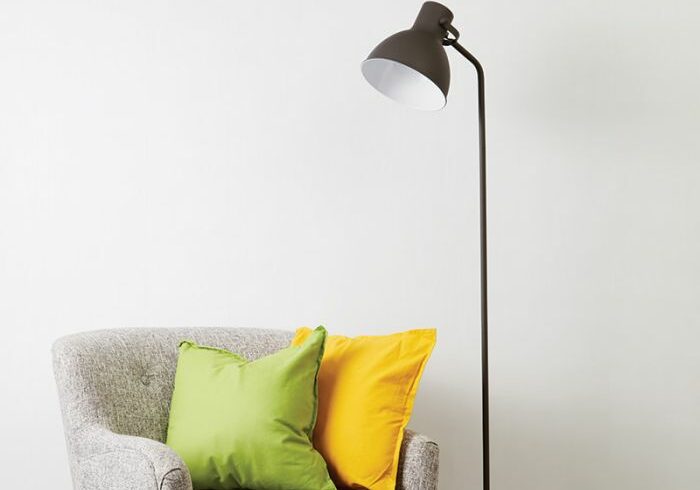
A well-chosen floor lamp improves a room aesthetically, but it can also be a handy source of task lighting. In a waiting room, one or two floor lamps provide places to read, especially for older patients who may need a stronger light to discern text comfortably. A classic standard lamp is good for reading, since the light directly beneath it is stronger than the light sent through its shade.

An arced floor lamp such is ideal for reading, with a shade that sends light downwards and can be positioned over a seat. Reading usually requires a minimum light intensity of 300 lux, though this might increase to 500 lux for more mature eyes. Floor lamps provide this level of light for anyone that needs it.

To avoid visual fatigue, there should not be too much contrast between ambient light levels and reading lights (or ambient light levels and a TV screen).

Home from home

Waiting rooms are a little like living rooms with extra chairs. They don’t typically include luxurious sofas or showy decorative lights, but the aim is to inspire confidence and make patients feel as comfortable as possible. Carefully chosen waiting room lights will help achieve exactly that.

For more useful information and guidance see our Lighting Advice section.

andrew-author-bio

Andrew Evangelidis Head of Buying

Andrew is an experienced buying professional who takes an entrepreneurial approach to identify new lighting solutions and ensure Lyco have first-to-market ranges for our customers. Having previously worked for well known brands such as Wickes, Carphone Warehouse and Toys R Us, Andrew has now turned his hand to sourcing commercial lighting and ensure our customers receive top brand quality products at marketing leading prices. He manages a team of commercial and decorative buyers who travel the world finding new products that our customers don’t even know they need yet.