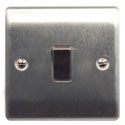
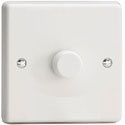
Emergency Lighting: Making An Escape

Emergency lighting delivers light during a loss of mains power, using either independent fittings with their own batteries or emergency lighting circuits and a generator. Independent emergency lights are popular because they are quick and cheap to install. They benefit from not being linked by the same central power supply or wiring, eliminating the risk of multiple lights being disabled by a single failure.

Emergency lighting categories

There are two main categories of emergency lighting: escape lighting and standby lighting. Of these, escape lighting should be the primary focus of any lighting specifier or installer. It has the potential to save lives in the event of a fire. Standby lighting allows normal work to continue after a power failure, but does not form part of a building’s fire protection.

Escape lighting is divided into three sub-categories, as follows:

  • Escape route lighting plays the vital role of enabling quick evacuation of a building. Included in this category are green exit signs with pictograms or pictograms and text (the two styles should not be mixed). Also emergency ceiling or wall lights that provide a minimum 1-lux light level along the centre line of escape routes (e.g. the centre of a corridor floor).
  • Open area lighting must include emergency fittings if the floor area is larger than 60m². This is to prevent panic in places where people are likely to congregate and is sometimes called ‘anti-panic’ emergency lighting. Smaller areas are also counted as open area lighting, such as toilets (above 8m² and all disabled toilets), escalators, and lifts.
  • High-risk task area lighting ensures that task areas remain illuminated that would cause imminent danger to life if abruptly darkened. Examples include hospital operating theatres or wards and control rooms in dangerous plants or production facilities. A minimum 10% of normal lighting levels must be provided by emergency lighting in these areas, or a 15-lux minimum if this value is higher (the former is more likely).

Lux is an SI unit that measures the intensity of incident light on a surface. It is directly affected by the distance between the surface (e.g. floor or desk) and the light source.

Points of emphasis

Critical areas or features of an escape route are called ‘points of emphasis’, with each point requiring emergency lighting. They include the following:

  • Emergency exit doors
  • Exit and safety signs
  • All flights of stairs
  • Changes in floor level
  • Changes of direction
  • Intersections of corridors/escape routes
  • Fire alarm call points
  • First aid posts
  • Firefighting equipment
  • Outside and near (within 2m) each final exit

Maintained v non-maintained emergency lights

A maintained emergency light is used as part of an overall lighting scheme and stays switched on in the event of a power cut. A non-maintained light is kept switched off, but activates automatically during a power cut. Both types of fitting include a battery, which allows up to 3 hours of back-up lighting.

Maintained exit signs are a necessity in public buildings and entertainment venues, where occupants are less likely to be familiar with escape routes. Non-maintained exit signs are common in private workplaces.

LED leads the way

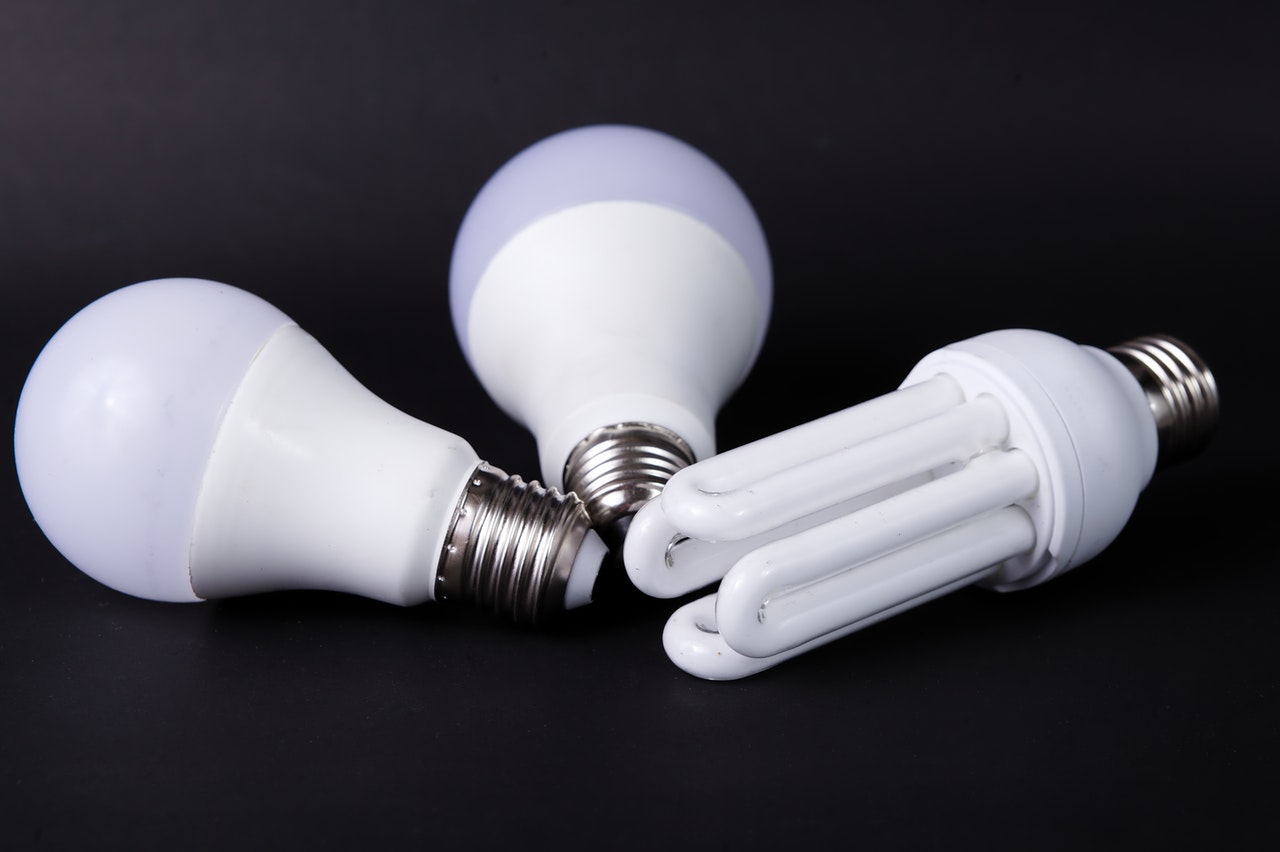
LED emergency lights are being increasingly used in place of fluorescent equivalents, which were the main emergency light source for years. LED technology has been improved to such a degree that it excels in most applications. It is often 30 to 50% more energy efficient than fluorescent lighting and has a long lifespan of up to 50,000 hours. A fluorescent lamp might only last 6,000 hours before it abruptly fails.

Other LED benefits include instant full power light with no warm-up time (useful in emergency lighting), resistance to vibration and shock, and reliable cold temperature performance down to about -20°C.

Maintained emergency lights benefit most from LED longevity because they are used for several hours a day. With ceiling lights, you’ll usually be able to buy standard fittings from the same range, so you can blend your emergency luminaires seamlessly into an overall lighting scheme. Emergency lighting image 1

A non-maintained light fitting sometimes benefits from a discreet design, since it does not function as part of an everyday lighting scheme. The Daylight LED Emergency Light capitalises on the compact size of LEDs. This tiny fitting easily surpasses typical escape route requirements and because LED lighting is naturally directional, it is able to focus light of sufficient intensity along escape routes with minimal loss of light or use of battery power.


The Kosnic 3w LED Twinspot Emergency Fitting is a non-maintained wall fitting that is ideal for lighting walkways in high-bay warehouses and industrial areas. Its IP65 Kosnic Orda 3W LED Non Maintained Self-Test Emergency Twin-Spot - White rating also allows use along outdoor escape routes leading to safety points. Again, the directional nature of LEDs means very little light is spilled in spotlighting applications.

British Standards

Installation of an emergency lighting system requires compliance with the following British Standards:

  • BS 5266-1:2011 (Code of practice for the emergency escape lighting of premises)
  • BS EN 1838:2013 (Emergency lighting)
  • BS EN 50172:2004 – also numbered as BS 5266-8:2004 (Emergency escape lighting systems)
  • BS 7671:2008 incorporating amendment number 1:2011 (IET Wiring Regulations 17th Edition)

Further reading

An authoritative PDF guide to emergency lighting is downloadable from the ICEL (Industry Committee for Emergency Lighting) here.

For more useful information visit our Lighting Advice section.

andrew-author-bio

Andrew Evangelidis Head of Buying

Andrew is an experienced buying professional who takes an entrepreneurial approach to identify new lighting solutions and ensure Lyco have first-to-market ranges for our customers. Having previously worked for well known brands such as Wickes, Carphone Warehouse and Toys R Us, Andrew has now turned his hand to sourcing commercial lighting and ensure our customers receive top brand quality products at marketing leading prices. He manages a team of commercial and decorative buyers who travel the world finding new products that our customers don’t even know they need yet.

Recessed Downlights – Planning The Perfect Layout

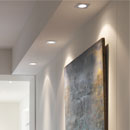
Recessed downlights are a versatile light source for homes, hospitals, hospitality settings, offices, schools, or retail environments. They can fulfill any of the three main lighting roles: general lighting, task lighting, and accent lighting.

This article advises on how many fittings you’d need for any given space, and discusses some of the issues associated with recessed downlights.

So Where Do You Start?

Recessed downlighting layout image 1

Preliminary Questions

Before shopping for downlights, it’s useful to note a few details:

  • What is the size of the space?
  • What is the height of the ceiling?
  • Is it an open plan area?
  • What is the room’s purpose?

This information enables you to calculate how many lights you need and what type.

How Many Downlights Do I Need?

A simple method for estimating the number of downlights required is as follows:

  • Step 1: Multiply the room’s width by its depth to ascertain the square footage.
  • Step 2: Multiply the square footage by 1.5 to give the total wattage needed in the room. For example, a 15 x 10 foot room is 150 square feet in size; multiplying this figure by 1.5 gives you a total of 225 watts.
  • Step 3: Divide the total wattage previously calculated (225 in our example) by your chosen bulb wattage to work out how many fittings you need. A 6 x 40W installation would be sufficient in our theoretical 150 square foot room.

Task lighting areas need more light. To account for this, you can multiply the footage by 2.5 rather than the 1.5 figure used above.

Divide an open plan space into areas to make your calculations. If using LED downlights, use their equivalent wattage in these sums.

Recessed downlighting image 2

This is intended as a guideline only. An experienced installer will offer tailored advice.

Ceiling Height

The coverage area of a downlight depends on the beam angle of the light source and the height of the ceiling. A flood beam spotlight naturally lights a greater surface area than a narrow beam, but with less intensity (assuming the two emit an identical amount of light in lumens).

Spacing

Recessed downlights are generally positioned 1.5 to 2 ft. away from walls with a space of 3 to 4 feet between each light. Dividing the ceiling height by two is a way of gauging how much space to leave between each downlight. Thus, if your ceiling is 8 foot high, place your lights 4 feet apart.

Lux Measurements

Strict guidelines exist regarding how intense light should be in different areas of a workplace. Light intensity as it hits a surface is measured in units of lux (abbreviated to lx). Lux meters or online lumens-to-lux calculators can be used to measure or estimate this adequacy of light.

Lux measurements are governed by EN 12464-1 regulations. For example, an office workstation needs a minimum light intensity of 500 lx, foyers or entrance halls need 200 lx, corridors need up to 200 lx, stairs or lifts need 100 lx, and so on. Similarly, in the home, a task lighting area such as a kitchen worktop benefits from at least 300 lx, whereas a living room needs only 150 to 200 lx.

Beam Angles and Fire Ratings

A narrow spot beam gives an intense light for task applications and is useful for highlighting small display items. Choose a recessed downlight with a flood beam for general lighting. Those with an adjustable head can be aimed at pale-coloured walls or cupboards to spread light.

Any fire-rated ceiling, which is usually one beneath an occupied floor, needs a fire-rated downlight to be installed. This prevents an early ceiling collapse in the event of a fire, allowing crucial evacuation time for anyone above.

IP Ratings

When installing downlights in a bathroom you’ll generally need a product with a minimum IP44 rating. Please read our guide to IP ratings for further advice.

Dimming

Choose dimmable downlights to create mood and save energy. Contrasting areas of light and dark invariably add atmosphere to a room. You might use dimmable downlights for general lighting, turning them down for intimate effect while giving greater emphasis to floor lamps, table lamps, picture lights or wall lights.

For more useful information, check out our Lighting Advice section.

andrew-author-bio

Andrew Evangelidis Head of Buying

Andrew is an experienced buying professional who takes an entrepreneurial approach to identify new lighting solutions and ensure Lyco have first-to-market ranges for our customers. Having previously worked for well known brands such as Wickes, Carphone Warehouse and Toys R Us, Andrew has now turned his hand to sourcing commercial lighting and ensure our customers receive top brand quality products at marketing leading prices. He manages a team of commercial and decorative buyers who travel the world finding new products that our customers don’t even know they need yet.

Ceiling fans for all year round energy savings

It doesn’t seem logical that a ceiling fan might save energy, since it uses electricity itself. You’d be forgiven for thinking it would only add to your bills. However, a ceiling fan is cheap to run and reduces the amount of air conditioning needed in the summer. If you’re already spending money on cooling a room, you can save up to 40% of those costs by installing a fan.

A bigger surprise for anyone that hasn’t considered a ceiling fan before is the scope for lowering heating costs in the winter. Many fans have a reverse, clockwise mode, which recirculates the warm air held at ceiling level and enhances heating efficiency. By allowing you to turn heating down, a fan may save 10% on the cost of warming a room.

The Key Facts

How a ceiling fan works

A ceiling fan cools the occupants of a room, but doesn’t cool the room itself. By circulating air, a fan helps the human body to lose heat through evaporation of sweat (identical in principle to wind chill). For this reason, it is pointless to run a fan in an empty room.

Room sizes

Ceiling fan size is chosen according to room size. You’ll need a fan that is big enough to be effective in the proposed space, otherwise you are certain to be disappointed by the results. The table below will guide you towards the right product.

ROOM SIZE FAN SIZE
Up to 60 square feet (5.6 m2) 30 to 39 inches
Up to 140 square feet (13 m2) 40 to 49 inches
Up to 350 square feet (32.5 m2) 50 to 60 inches


Fan blades and features

Ceiling fans usually have three to five fan blades and occasionally more. The number of blades is not a reliable indicator of performance, since other factors such as blade pitch and motor efficiency affect the fan’s ability to circulate air. Though they are rare, some ceiling fans have a single blade. Your buying decision should not be swayed by the number of blades.

A very common feature among ceiling fans is that they are reversible, with the top and underside of the blades finished differently. This is useful if you fancy changing the fan’s appearance or need to match a newly decorated room. Larger fans tend not to offer this and have a neutral white, grey, or silver finish to blend with commercial or industrial ceilings.

Fan lights

Because ceiling fans are often destined for the centre of a room, many of them also include a light. A fan light is an ideal replacement for an ordinary pendant, because it provides a source of ambient room lighting as well as a means of circulating air. Most fan lights accommodate a bulb, usually of a high enough wattage to allow a choice of technology. A halogen bulb offers exceptional light quality, but lacks energy efficiency and radiates heat, whereas an LED bulb coolly emits a high quality light while saving on running and maintenance costs. Your choice may vary depending on usage.

Ceiling height & accessories

For a fan to circulate air effectively, the distance between floor and blades should be between 7ft 6” and 9ft. Ceilings higher than 9ft will require use of a drop rod to lower the fan to a suitable height. These can usually be cut to size if necessary.

A drop rod is also needed if a fan is to be installed on a sloping surface. In that instance, sufficient space must be allowed for the blades to clear the angle of the ceiling.

In most cases, ceiling heights are likely to be within average range and adequately served by the product’s included fixings. The Fantasia Commercial Sweep 48 inch Ceiling Fan comes complete with 12” and 24” drop rods, which allows installation on a ceiling of up to 10 or 11 feet high, respectively.

Controls

Ceiling fans can usually be controlled in one of three ways: on/off pull cord, wall control, or remote control. Typically, you cannot have a remote control and a wall control installed at the same time, so those two options are mutually exclusive. Some fans come with a pull cord, but allow the possibility of upgrading. Other models are supplied with a remote or wall control as standard. Most offer a choice of three speed settings.

Guarantees

Our top-branded ceiling fans all come with manufacturer’s guarantees, for added peace of mind. Faro offers a guarantee of 15 years on all of its fan motors.

Give it a whirl

Some electrical products are wrongly perceived as needless luxuries, when in fact they are economically sound purchases. Few people would claim that for a tumble dryer, but it is often said of a dishwasher, which uses hot water and detergent far more sparingly than the average human does. A ceiling fan is similar, consuming very little energy while relieving more power-hungry appliances of work.

Attractively priced and available in traditional or modern styles, ceiling fans offer money-saving comfort all the year round. Why not have a look at our full range of ceiling fans?

Please feel free to call our friendly sales team with any queries on 0843 317 7820.

For more useful information visit our Lighting Advice section.

andrew-author-bio

Andrew Evangelidis Head of Buying

Andrew is an experienced buying professional who takes an entrepreneurial approach to identify new lighting solutions and ensure Lyco have first-to-market ranges for our customers. Having previously worked for well known brands such as Wickes, Carphone Warehouse and Toys R Us, Andrew has now turned his hand to sourcing commercial lighting and ensure our customers receive top brand quality products at marketing leading prices. He manages a team of commercial and decorative buyers who travel the world finding new products that our customers don’t even know they need yet.

Part L Building Regulations: LENI introduced – April 6th 2014

The building regulations that govern the introduction of lighting into new homes / premises have been updated. Back in 2013, changes to Part L Building Regulations (Conservation of Fuel and Power) were announced. Originally due to come into force in October of that year, the new measures were finally introduced on April 6th 2014, after a six-month delay.

Part L 2013 Building Regulations relate to England only and are no longer applicable to Wales. They apply to most new buildings and alterations and are a legal requirement. The new regulations affect any work started after 6th April 2014, unless an initial notice, building notice, or full plans application was made before that date. So, what’s new in terms of lighting?

Part L1 (Building regulations for domestic dwellings)

On the domestic front, Part L1 2013 Building Regulations further reduce carbon emissions over the 2010 edition, but lighting requirements are unchanged. They remain as follows:

Internal lighting

Bedroom lighting

  • At least 75% of all light fittings in main dwelling spaces should be low energy (this excludes infrequently accessed storage spaces such as cupboards and wardrobes).
  • Low energy light fittings must have a luminous efficacy greater than 45 lm/W and a total output exceeding 400 lumens.
  • Light fittings consuming less than 5 watts are excluded from the overall count of the total number of light fittings.

External lighting

  • Either of two sets of criteria is possible: a 100W maximum lamp capacity with occupancy sensor and photocell (light must stay off when daylight is sufficient) or minimum lamp efficacy of 45 lm/W with a photocell and manual on/off switching.

Part L2 (Building regulations for non-domestic / commercial premises)

This update of the Part L Building Regulations brought profound change to non-domestic lighting requirements. In complying with these regulations, specifiers are now faced with two options:

  1. The previous luminaire efficacy calculation method, which takes lighting control into account
  2. The long-awaited LENI system that performs a complex equation to calculate actual energy usage

We’ll outline the features of both systems here:

Luminaire Efficacy Calculation Method

The main advantage of this mode of calculation is that it’s relatively easy to understand. For that reason, it may be favoured for simpler projects. Its two key points are:
Office Lighting

  • For general office and industrial lighting, the basic Part L luminous efficacy requirement has been increased from 55 to 60 lumens per watt.
  • Display lighting requirements remain unchanged, with a 22 lm/W average needed for compliance.

The table below illustrates the allowances made for lighting controls, including dimmer switches and occupancy sensors. An increase in these allowances is introduced, with a new 0.7 control factor and minimum 42 lm/W luminous efficacy.

2013 Control Factors for the Luminaire Efficacy Calculation Method (non-controlled = 60 lm/W)

  Controls Control Factor Reduced lm/W efficacy requirement
A Daylit space with photo-switching with or without override 0.90 54
B Daylit space with photo-switching with or without override + dimming 0.85 51
C Unoccupied space with automatic on & off occupancy 0.90 54
D Unoccupied space with manual on & off occupancy 0.85 51
E Space not daylit, dimmed for constant illuminance 0.90 54
A + C 0.80 48
A + D 0.75 45
B + C 0.75 45
B + D 0.70 42
E + C 0.80 48
E + D 0.75 45

LENI (Light Energy Numeric Indicator): the new metric

LENI is the second approach to calculating lighting efficiency, which runs alongside the existing “efficacy method” as an alternative option. Its aim is to predict accurately the actual energy used by a lighting system, taking into account daylight hours, when and how installations are used, parasitic energy consumption, and control factors (occupancy, dimming in response to daylight, and constant illuminance – a calibrated and maintained lux level for each area of a building).

Using a complex formula, LENI measures lighting performance in terms of energy per square metre per year (kWh/m²/year). It allows for a more flexible lighting scheme, where the whole installation is evaluated rather than being anchored by the performance of individual lamps and luminaires. It places a greater emphasis on good lighting design and moves away from a pure numbers game.

Ideal for larger projects

Because of its complexity, the LENI system is likely to be used more for larger lighting projects, where specialist designers will often be employed. It’s worth considering, however, that lighting installations created by specialist designers typically consume 30% less energy than those devised by non-experts.

The LENI index is a core part of the BS EN 15193 Standard (Energy Requirements for Lighting). It is outlined in full detail on Page 70 of the HM Government Non-Domestic Building Services Compliance Guide (PDF).

Don’t worry – help is at hand

Relux Lighting ToolIf this looks a little complicated, don’t worry. You don’t have to be a mathematical genius to get to grips with LENI. There are various free lighting design programs that incorporate a LENI calculator. Two examples are: DIALux and RELUX. Also, if you have no fear of spreadsheets, Thorn Lighting provides a LENI formulae template.

Easy Part L compliance with Lyco

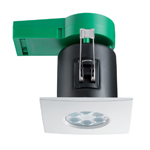
Take a closer look at the LED6 Square DownlightWhether you’re a builder, specifier, or designer, Lyco stocks a wide range of products to help you meet Part L lighting requirements.
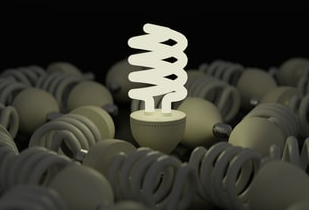
Many products deliver a performance that exceeds basic Part L efficacy requirements while also offering elements of control.

Take a closer look at the Carina Semi Flush Light

Lyco also stocks a selection of Varilight dimmer switches, which are revered in the lighting industry for their reliable LED dimming performance.

However simple or sophisticated your needs, we’ll help you find the right product(s) for a satisfying lighting solution. Feel free to give us a call if you need any further guidance.

Why not take a look at our Lighting for New Build series of articles?

Alternatively, for more inspiration and advice try our Lighting Advice section.

andrew-author-bio

Andrew Evangelidis Head of Buying

Andrew is an experienced buying professional who takes an entrepreneurial approach to identify new lighting solutions and ensure Lyco have first-to-market ranges for our customers. Having previously worked for well known brands such as Wickes, Carphone Warehouse and Toys R Us, Andrew has now turned his hand to sourcing commercial lighting and ensure our customers receive top brand quality products at marketing leading prices. He manages a team of commercial and decorative buyers who travel the world finding new products that our customers don’t even know they need yet.

CFL & Tube Code Lookup Charts

CFL & Tube Code Lookup Charts

Updated on 26/03/2020

If you have any questions regarding replacement tubes, please call our sales team on 0800 074 8316.

Finding the exact linear fluorescent tube or pin-fitting CFL that you need is rarely a straight-forward task, especially when faced with numerous product codes and reference numbers. Here at Lyco we stock a wide range of great value fluorescents at competitive prices and as well as offering most of the popular tubes types available, we also stock many compatible alternatives.

If you have a reference code but can’t find exactly what you need, why not take a look at our reference charts below? Simply use the links and find the code on the relevant sheet, or for a quick cheat, press Ctrl+F and search for your desired code. Once you’ve found it, click the Lyco equivalent link at the start of the row to be taken to the appropriate fluorescent that you need.

Fluorescent Tubes

T5 High Efficency Tubes T5 High Output Tubes Mini T5 Tubes T8 Tubes

Compact Fluorescent

2-Pin CFL 4-Pin CFL
2-Pin Single 4-Pin Single
2-Pin Double 4-Pin Double
2-Pin Triple 4-Pin Triple
4-Pin Long


Fluorescent Tube Manufacturer’s Number Lookup Chart


T5 High Efficiency Tubes

Lyco GE OSRAM PHILIPS HAVELLS SYLVANIA
Equivalent T5 LongLast™ High Efficiency Lumilux T5 HE Master TL5 HE T5 Luxline Plus FHE
72952 F14W/T5/835/LL FH 14W/835HE
72953 F14W/T5/840/LL FH14W/840HE 14W/840 FHE14W/840
10308 F14W/T5/865/LL FH14W/865HE 14W/865 FHE14W/860
72954 F21W/T5/835/LL FH21W/835HE
72955 F21W/T5/840/LL FH21W/840HE 21W/840 FHE21W/840
10309 F21W/T5/865/LL FH21W/865HE 21W/865 FHE21W/860
72956 F28W/T5/835/LL FH28W/835HE
72957 F28W/T5/840/LL FH28W/840HE 28W/840 FHE28W/840
10310 F28W/T5/865/LL FH28W/865HE 28W/865 FHE28W/860
72958 F35W/T5/835/LL FH35W/835HE
72959 F35W/T5/840/LL FH35W/840HE 35W/840 FHE35W/840
10311 F35W/T5/865/LL FH35W/865HE 35W/865 FHE35W/860

Back to Top


T5 High Output Tubes

Lyco GE OSRAM PHILIPS HAVELLS SYLVANIA
Equivalent T5 LongLast™ High Output Lumilux T5 HO Master TL5 HO T5 Luxline Plus FHO
72960 F24W/T5/835/LL FH24W/835HO
72961 F24W/T5/840/LL FH24W/840HO 24W/840 FHO24W/840
10312 F24W/T5/865/LL FH24W/865HO 24W/865 FHO24W/860
72963 F39W/T5/840/LL FH39W/840HO 39W/840 FHO39W/840
10313 F39W/T5/865/LL FH39W/865HO 39W/865 FHO39W/860
72964 F49W/T5/835/LL FH49W/835HO
72965 F49W/T5/840/LL FH49W/840HO 49W/840 FHO49W/840
10314 F49W/T5/865/LL FH49W/885HO 49W/865 FHO49W/860
72966 F54W/T5/835/LL FH54W/835HO
72967 F54W/T5/840/LL FH54W/840HO 54W/840 FHO54W/840
10315 F54W/T5/865/LL FH54W/865HO 54W/865 FHO54W/860
72968 F80W/T5/840/LL FH80W/840HO 80W/840 FHO80W/840

Back to Top


Mini T5 Tubes

Lyco GE OSRAM PHILIPS HAVELLS SYLVANIA
Equivalent T5 Miniature Standard Energy Saver (Basic) T5 short TL Mini T5 Standard
1315 F4W/T5/35
1317 F6W/T5/35
1319 F8W/T5/29 F8W/129
1320 F8W/T5/35
1321 F8W/T5/33 L8W/640 8W/33-640 F8W/133

Back to Top


T8 Tubes

Lyco GE OSRAM PHILIPS HAVELLS SYLVANIA
Equivalent T8 Polylux XLR™ LongLast™ Lumilux XT T8 Master TL-D Xtra
72594 F58W/T8/840/POLYLUX/LL L58W/840XT 58W/840
T8 Polylux XLR™ Lumilux T8 Master TL-D Super 80 T8 Luxline Plus
10264 FF15W/T8/835 POLYLUX
10265 F15W/T8/840/POLYLUX L15W/840 15W/840 F15W/840
1701 F18W/T8/830/POLYLUX L18W/830 18W/830 F18W/830
50205 F18W/T8/835/POLYLUX L18W/835 F18W/835
1696 F18W/T8/840/POLYLUX L18W/840 18W/840 F18W/840
8150 F18W/T8/860/POLYLUX L18W/865 18W/865 F18W/860
10266 F30W/T8/830/POLYLUX L30W/830 30W/830 F30W/830
10267 F30W/T8/840/POLYLUX L30W/840 30W/840 F30W/840
1702 F36W/T8/830/POLYLUX L36W/830 36W/830 F36W/830
50202 F36W/T8/835/POLYLUX L36W/835 F36W/835
1697 F36W/T8/840/POLYLUX L36W/840 36W/840 F36W/840
8610 F36W/T8/860/POLYLUX L36W/865 36W/865 F36W/865
1703 F58W/T8/830/POLYLUX L58W/830 58W/830 F58W/830
50203 F58W/T8/835/POLYLUX L58W/835 F58W/835
1698 F58W/T8/840/POLYLUX L58W/840 58W/840 F58W/840
8843 F58W/T8/860/POLYLUX L58W/865 58W/865 F58W/860
50204 F70W/T8/835/POLYLUX L70W/835 F70W/840
1699 F70W/T8/840/POLYLUX L70W/840 70W/840

Back to Top


Compact Fluorescent Manufacturer’s Number Lookup Chart

2-Pin CFLs


Lyco GE OSRAM PHILIPS HAVELLS SYLVANIA
Biax™S 2pin Dulux S PLS Lynx-S
71283 F5BX/827 DULUX S 5W/827 PL-S 5W/827/2P Lynx S 5W/827
71290 F5BX/840 DULUX S 5W/840 PL-S 5W/840/2P Lynx S 5W/840
71284 F7BX/830 DULUX S 7W/830 PL-S 7W/830/2P Lynx S 7W/830
10290 F7BX/835 Lynx S 7W/835
71285 F7BX/840 DULUX S 7W/840 PL-S 7W/840/2P Lynx S 7W/840
10291 F9BX/835 Lynx S 9W/835
71287 F9BX/840 DULUX S 9W/840 PL-S 9W/840/2P Lynx S 9W/840
71288 F11BX/830 DULUX S 11W/830 PL-S 11W/830/2P Lynx S 11W/830
10292 F11BX/835 Lynx S 11W/835
71289 F11BX/840 DULUX S 11W/840 PL-S 11W/840/2P Lynx S 11W/840

Back to Top


Lyco GE OSRAM PHILIPS HAVELLS SYLVANIA
Equivalent Biax™D 2pin Dulux-D PL-C Lynx-D
71299 F10DBX/830 DULUX D 10W/830 PL-C 10W/830/2P Lynx D 10W/830
10293 F10DBX/835 Lynx D 10W/835
71300 F10DBX/840 DULUX D 10W/840 PL-C 10W/840/2P Lynx D 10W/840
71301 F13DBX/830 DULUX D 13W/830 PL-C 13W/830/2P Lynx D 13W/830
71302 F13DBX/840 DULUX D 13W/840 PL-C 13W/840/2P Lynx D 13W/840
71303 F18DBX/830 DULUX D 18W/830 PL-C 18W/830/2P Lynx D 18W/830
10295 F18DBX/835 PL-C 18W/835/2P Lynx D 18W/835
71304 F18DBX/840 DULUX D 18W/840 Lynx D 18W/840
71305 F26DBX/830 DULUX D 26W/830 PL-C 26W/830/2P Lynx D 26W/830
10296 F26DBX/835 Lynx D 26W/835
71306 F26DBX/840 DULUX D 26W/21840 PL-C 26W/840/2P Lynx D 26W/840

Back to Top


Lyco GE OSRAM PHILIPS HAVELLS SYLVANIA
Equivalent Biax™T 2pin Dulux T PL-T Lynx-S
72071 F13TBX/830/A/2P DULUX T 13W/830 PL-T 13W/830/2P
72072 F13TBX/840/A/2P DULUX T 13W/840 PL-T 13W/840/2P
72073 F18TBX/830/A/2P DULUX T 18W/830 PL-T 18W/830/2P Lynx T 18W/830
72074 F18TBX/84O/A/2P DULUX T 18W/840 PL-T 18W/840/2P Lynx T 18W/840
72075 F26TBX/830/A/2P DULUX T 26W/830 PL-T 26W/830/2P Lynx T 26W/830
72076 F26TBX/840/A/2P DULUX T 26W/840 PL-T 26W/840/2P Lynx T 26W/840

Back to Top


4-Pin CFLs


Lyco GE OSRAM PHILIPS HAVELLS SYLVANIA
Equivalent Biax™S/E 4pin Dulux-SE PLS Lynx – SE
72053 F5BX/827/4P DULUX S/E 5W827 PL-S 5W/827/4P Lynx SE 5W/827
72054 F5BX/840/4P DULUX S/E 5W/840 PL-S 5W/840/4P Lynx SE 5W/840
72055 F7BX/827/4P DULUX S/E 7W/827 PL-S 7W/827/4P Lynx SE 7W/827
72056 F7BX/840/4P DULUX S/E 7W/840 PL-S 7W/840/4P Lynx SE 7W/840
72057 F9BX/827/4P DULUX S/E 9W/827 PL-S 9W/827/4P Lynx SE 9W/827
72058 F9BX/840/4P DULUX S/E 9W/840 PL-S 9W/840/4P Lynx SE 9W/840
72059 F11BX/840/4P DULUX S/E 11W/840 PL-S 11W/840/4P Lynx SE 11W/840

Back to Top


Lyco GE OSRAM PHILIPS HAVELLS SYLVANIA
Equivalent Biax™D/E 4pin Dulux-DE PL-C Lynx-DE
10297 F10DBX/830/4P/EOL DULUX D/E 10W/830 PL-C 10W/830/4P Lynx DE 10W/830
10299 F10DBX/840/4P/EOL DULUX D/E 10W/840 PL-C 10W/840/4P Lynx DE 10W/840
71315 F13DBX/830/4P/EOL DULUX D/E 13W/830 PL-C 13W/830/4P Lynx DE 13W/830
71316 F13DBX/840/4P/EOL DULUX D/E 13W/840 PL-C 13W/840/4P Lynx DE 13W/840
71317 F18DBX/830/4P/EOL DULUX D/E 18W/830 PL-C 18W/830/4P Lynx DE 18W/830
10301 F18DBX/835/4P/EOL Lynx DE 18W/835
71318 F18DBX/840/4P/EOL DULUX D/E 18W/840 PL-C 18W/840/4P Lynx DE 18W/840
71319 F26DBX/830/4P/EOL DULUX D/E 26W/830 PL-C 26W/830/4P Lynx DE 26W/830
10302 F26DBX/835/4P/EOL Lynx DE 26W/835
71320 F26DBX/840/4P/EOL DULUX D/E 26W/840 PL-C 26W/840/4P Lynx DE 26W/840

Back to Top


Lyco GE OSRAM PHILIPS HAVELLS SYLVANIA
Equivalent Biax™T/E 4pin Dulux T/E PL-T Lynx- TE
10303 F13TBX/835/A/4P/EOL
10304 F18TBX/835/A/4P/EOL
10305 F26TBX/835/A/4P/EOL
10306 F32TBX/835/A/4P/EOL
72077 F13TBX/830/A/4P/EOL DULUX T/E 13W/830 PL-T 13W/830/4P
72078 F13TBX/840/A/4P/EOL DULUX T/E 13W/840 PL-T 13W/840/4P
72079 F18TBX/830/A/4P/EOL DULUX T/E 18W/830 PL-T 18W/830/4P Lynx TE 18W/830
72080 F18TBX/840/A/4P/EOL DULUX T/E 18W/840 PL-T 18W/840/4P Lynx TE 18W/840
72081 F26TBX/830/A/4P/EOL DULUX T/E 26W/830 PL-T 26W/830/4P Lynx TE 26W/830
72082 F26TBX/840/A/4P/EOL DULUX T/E 26W/840 PL-T 26W/840/4P Lynx TE 26W/840
72083 F32TBX/830/A/4P/EOL DULUX T/E 32W/830 PL-T 32W/830/4P Lynx TE 32W/830
72084 F32TBX/840/A/4P/EOL DULUX T/E 32W/840 PL-T 32W/840/4P Lynx TE 32W/840

Back to Top


Lyco GE OSRAM PHILIPS HAVELLS SYLVANIA
Equivalent Biax™L 4pin Dulux-L PL-L Lynx L & Lynx-LE
72061 F18BX/830 DULUX L 18W/830 PL-L 18W/830/4P Lynx L 18W/830
10285 F18BX/835 PL-L 18W/835/4P Lynx L 18W/835
72062 F18BX/840 DULUX L 18W/840 PL-L 18W/840/4P Lynx L 18W/840
72063 F24BX/830 DULUX L 24W/830 PL-L 24W/830/4P Lynx L 24W/830
10286 F24BX/835 PL-L 24W/835/4P Lynx L 24W/835
72064 F24BX/840 DULUX L 24W/840 PL-L 24W/840/4P Lynx L 24W/840
72065 F36BX/830 DULUX L 36W/830 PL-L 36W/830/4P Lynx L 36W/830
10287 F36BX/835 PL-L 36W/835/4P Lynx L 36W/835
72066 F36BX/840 DULUX L 36W/840 PL-L 36W/840/4P Lynx L 36W/840
72067 F40BX/830 DULUX L 40W/830 PL-L 40W/830/4P Lynx LE 40W/830
10288 F40BX/835 PL-L 40W/835/4P Lynx LE 40W/835
72068 F40BX/840 DULUX L 40W/840 PL-L 40W/840/4P Lynx LE 40W/840
72069 F55BX/830 DULUX L 55W/830 PL-L 55W/830/4P Lynx LE 55W/830
10289 F55BX/835 PL-L 55W/835/4P Lynx LE 55W/835
72070 F55BX/840 DULUX L 55W/840 PL-L 55W/840/4P Lynx LE 55W/840

Back to Top

Still need help?

If you still can’t find what you are looking for and would like some help, please do not hesitate to give our customer services a call on 0800 074 8316 and they will be pleased to go through your options and requirements.

Looking for more advice? Try our Lighting Advice section.

Charles Barnett Managing Director

Charles started Lyco in 1995 with just 4 enthusiastic employees and has grown it considerably over the past 25 years. Charles is also the Managing Director of Lighting Direct and newly acquired Online Lighting. He now has a team of 50 lighting experts working on growing Lyco Group to be the UK leader in lighting for both businesses and homes. Away from the office he is a keen cyclist and is proud to have cycled 1017 miles from Lands End to John O’Groats to raise money for a new residential centre for adults with multiple learning difficulties.

Commercial & industrial lamps – pros & cons

Investment in lighting is important for any industrial or commercial premises. Practical benefits aside, the right choices will minimise running costs and strengthen profits. Linear fluorescent and HID (High Intensity Discharge) lights are the norm in this sector, though LED technology is gaining in popularity. This article looks at various commercial and industrial lamps and weighs up their pros and cons.

HID Lamps

HID lamps produce light by creating an electric arc between two electrodes in a gas-filled tube. They are a particularly powerful light source, used for car parks, gyms, factories, football stadiums, paths, roads, and warehouses. There are various types of HID lamp, as follows.

Metal Halide lamps last from 7,500 to 20,000 hours and are used in sports stadiums and car parks. They are also a good choice for warehouses and other high bay indoor purposes. The lamps produce a crisp white light and offer a good standard of colour rendering with typical CRI 60 to 70 scores. A choice of colour temperatures is possible, from warm white to daylight. With a luminous efficacy of between 80 and 120 lumens per watt, these lamps match the best LED or fluorescent products for energy efficiency.

Venture 250W Double Ended Metal Halide Bulb

A typical example of a metal halide lamp is the Venture 150W Double Ended Metal Halide, which has a cool 4200K colour temperature that’s ideal for work areas and sports activities.

The main disadvantages of metal halide lamps include light pollution, UV emission if their outer glass breaks, and use of mercury and other heavy metals.

Ceramic Metal Halide (CMH) lamps are also called ceramic discharge metal-halide lamps (CDM). The main difference between them and regular quartz metal halide lamps is that they allow a higher arc tube temperature, resulting in improved colour rendering and stability. For this reason, CDM lamps are often used in colour-critical applications such as retail display lighting, architectural lighting, or film and television.

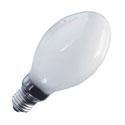
SON-E lamps are elliptically shaped, high-pressure sodium lamps. They are used in street lighting and general floodlighting. One of the main advantages of these lamps is their energy efficiency, which is shown by a luminous efficacy ranging from 65 to 140 lumens per watt. The higher end of that scale is unsurpassed by most light sources. Lifespan is also impressive with average expectancy of 15,000 to 50,000 hours. Colour temperature in these lamps is always warm.

SON lamps work with ignitors, which are either in the lamp itself (internal) or in the fitting (external). The 70w SON-E uses an internal ignitor and boasts a 12,000-hour lifespan and luminosity of 5,800 lumens.400W Son-E Bulb with Giant Screw Cap Fitting


On the down-side SON lamps offer poor colour rendering. A CRI 20 to CRI 30 score reflects this, which is unusable in any setting where colour recognition is important.

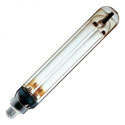
SON-T lamps are tubular high-pressure sodium lamps, with the same advantages and disadvantages as SON-E varieties (above).

White-Lux SON lamps are a metal halide lamp designed to work in a standard SON fitting. The main benefit is a more natural light with a cooler colour temperature and greatly improved colour rendering. Possible uses for this lamp are identical to those listed under metal halide, including sports stadiums and halls, car parks, and warehouses. This is a fine choice for anyone who wants to upgrade light quality in an existing SON fitting without having to change either the fitting or ballast.

Mercury vapour lamps are used in applications such as warehouses, car parks, stadia and other large-scale industrial buildings. They are a type of gas discharge lamp that uses an electric arc through vaporised mercury to emit light. A white phosphor coating is often used on the outer lamp to generate an intense white light.

The main drawbacks of high-pressure mercury vapour lamps are their slow 4-7 minute warm-up time, middling energy efficiency (about 50 lumens per watt), and inferior colour rendering compared to metal halide lamps.

Dual SON & Mercury lamps are dual metal halide lamps that can be used in either SON or mercury fittings for superior performance. They give a whiter, crisper light with improved colour rendering, and this is achievable without the cost of installing new light fittings or control gear. Suitable applications include factories, retail environments and sports halls.

White SON [SDW-T] lamps run at a higher pressure and temperature than regular SON lamps to achieve a superior standard of colour rendering. Manufactured by Philips, they usually carry a minimum CRI 80 score, which extends their suitability to applications such as downlighting, display lighting, and café or restaurant lighting.

There are disadvantages with White SON lamps, however, including high upfront cost and reduced energy efficiency. Our Philips models have a luminous efficacy of about 50 lumens per watt, which is less than half that of some HID lamps and is roughly equal to low-end LED or fluorescent lighting.

Philips 18W SOX lamp with a bayonet cap fitting

SOX (low-pressure sodium) lamps are gas discharge lamps that use sodium and neon gas to produce yellow light. These are the most energy-efficient of all artificial light sources, with typical luminous efficacies of between 100 and 180 lumens per watt. They are ideal for applications such as airports, harbours, foundries, orientation lighting, quarries, railway marshalling yards and crossings, rolling mills, security, and street lighting.

The main downside of a SOX lamp is its monochromatic light, which makes it impossible to discern colour in the absence of any other light source. For that reason, it’s a poor choice of lamp in any setting with colour safety markings or where crime prevention is needed.

LED

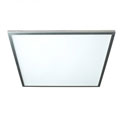
The LED Light Panel is one of our most popular dedicated commercial LED light fittings

LED commercial and industrial lighting often comes in the form of dedicated LED fittings, which are so long-lived that they do not take replacement bulbs. The whole fitting is replaced at the end of its useful life. LED lighting is naturally directional and thus easy to control. For that reason, dedicated LED fittings are uncommonly efficient in delivering light and less wasteful than other sources.

Disadvantages of LED include greater upfront cost and lower energy efficiency at source than some rival products (the best LED lighting cannot match the lumens per watt performance of sodium lamps). On average, colour rendering is likely to be better in a ceramic metal halide lamp; most LED products have an approximate CRI 80 score.

Linear Fluorescent Lamps

Fluorescent tubes have long been popular in industrial and commercial environments as a cheap source of diffuse light. Lyco stocks a variety of fluorescent batten fittings to house them, some of which are usable outdoors. The main disadvantage of fluorescent lamps against HID lamps is that they produce less light, so you’ll theoretically need more fittings to provide the same coverage. They are also adversely affected by hot or cold temperatures, resulting in lower light levels. Linear fluorescent lighting is ideal for corridors, tunnels, and aisles.

Need more guidance?

Lyco has many years of experience in serving all types of trades and industries. Please feel free to contact our sales team for advice on lighting any premises.

Feel free to browse our full range of commercial bulbs.

Alternatively, for more lighting guidance take a look at our advice section.

andrew-author-bio

Andrew Evangelidis Head of Buying

Andrew is an experienced buying professional who takes an entrepreneurial approach to identify new lighting solutions and ensure Lyco have first-to-market ranges for our customers. Having previously worked for well known brands such as Wickes, Carphone Warehouse and Toys R Us, Andrew has now turned his hand to sourcing commercial lighting and ensure our customers receive top brand quality products at marketing leading prices. He manages a team of commercial and decorative buyers who travel the world finding new products that our customers don’t even know they need yet.

LED Lighting guide for dummies

Three decades ago, LEDs were only really known for being the power indicators on electronic devices, as they were too weak to be of much use elsewhere. Today, however, LED is leading the way in the fight to produce increasingly efficient lighting by dramatically reducing energy consumption.

The high-brightness blue LED was introduced in 1993. Twenty times brighter than its green or red predecessors, this was the long-awaited enabler of white LED light. Then, as now, white LED light was produced by blending red, green, and blue light or by using a blue LED with a yellow phosphor. From this point on LED bulbs started their journey to take over the world of lighting.

All very well, but what is an LED?

The real science bit…

A Light Emitting Diode (LED) is a device that allows electrical current to flow in only one direction. It includes two conductive materials, placed in contact with each other. Electricity is applied to the diode so that atoms in one material are excited to a higher energy level. That energy is then released in the form of electrons into the second material, and this release of energy creates light.

How does this differ from traditional lighting?

Traditional incandescent lighting produces light directly by heat. A thin tungsten filament is warmed to about 2500°C by an electric current. Filament bulbs use 90% of their energy in maintaining this extreme temperature.

LED benefits

LED lighting boasts numerous benefits over rival technologies:

  • Energy-efficiency: LED lighting offers energy savings of 80-90% over incandescent or halogen technologies and up to 50% over fluorescent lamps.
  • Longer life: with typical lifespans of up to 50,000 hours, LED lasts 2 or 3 times longer than fluorescent lighting, and up to 50 times longer than incandescent. Maintenance costs are vastly reduced as a result.
  • Instant light: unlike many fluorescent lights, LEDs require no warm-up time to reach full brightness.
  • Eco-friendly: LED lighting has potential to drastically reduce carbon emissions. Around 20% of the world’s electricity is used on lighting. Unlike fluorescent lamps, LEDs contain no mercury, making disposal easier and cleaner. Longer lifespan relieves pressure on landfill sites.
  • Reduced heat output: LED lighting has significant heat dissipation needs. However, unlike filament bulbs, an LED lamp does not project infrared heat in its beam. This increases suitability for lighting heat-sensitive items like artworks or food.
  • Added durability: LEDs are a solid state form of lighting, resistant to vibration and shock. They are less delicate than incandescent or fluorescent lamps, and outperform competing technologies in cold temperatures.

Retrofit LED bulbs such as this 5W GLS look almost identical to traditional bulbs

Can I replace existing lights with LEDs?

Retrofit LED bulbs (ones that fit into existing bulb holders) are suitable in most situations. Close attention should be paid to heat dissipation needs, especially when replacing halogen reflectors in enclosed light fittings (e.g. recessed ceiling light). Advanced heat sink design in modern LED lamps overcomes the reliability problems seen in early models. Manufacturer’s guarantees are often supplied to back this.

A few words about dimming

Take a look at our useful LED v Incandescent infographicLED lighting is excellent for dimming, maintaining energy efficiency at all light levels. However, not all LED lamps or fittings are dimmable. Dimmability is a property of the LED driver, so you need to shop specifically for it. Shop for dimmable LED bulbs

Many modern LED lamps are compatible with old dimmer switches, but the minimum load of a switch (often 60W) is a potential problem if you only want to dim a few lights. It is sometimes easier to install a new dimmer switch, with modern ‘trailing-edge’ dimmers being suitable for LED loads.

Dedicated LED fittings

LED light fittings are increasingly designed with non-replaceable LEDs, mainly due to their long LED lifespan. In this instance, the whole luminaire is replaced at the end of its useful life. One of the advantages is that designers can build light fittings that are fine-tuned for efficiency, with very little light being wasted.

Does the light from an LED reduce over time?

Yes, it’s a process called lumen depreciation, which affects LED and fluorescent lighting. Incandescent bulbs produce the same amount of light throughout their lifespan.

LED lifespan is usually measured to a point where it has lost 30% of original lumen output (known as 70% lumen maintenance, or L70). Lumens are used to measure the total amount of light produced, regardless of direction or beam angle.

Reducing carbon emissions

It is argued by scientists worldwide that we are heading towards potentially disastrous climate change due to excessive carbon emissions. The way we create and use our energy is all part of this equation and regardless of your stance, reducing your carbon footprint is definitely a positive way of doing your bit for the environment. You’ll be saving money at the same time!

A switch to LED – savings in a UK household

The average UK household effectively creates 10 tonnes (10,000 kg) of carbon dioxide per year. Electricity usage accounts for roughly a third of it.

If a household burns 6 x 60W filament bulbs for 4 hours a day, that amounts to 319 kg of carbon emissions a year. The annual energy cost will be around £70.

By comparison, 6 x 10W LED retrofits produce 54 kg of carbon dioxide per year and cost £11.50 in electricity. In one year, you’ve recovered most of the bulb costs and still have years of light ahead.

Since lighting accounts for 15% of the average home’s electricity bill, an LED conversion significantly reduces your carbon footprint.

<!—Switch to LED Comparison infographic—>

LED in summary

LED lighting is energy efficient, long-lived, eco-friendly, robust, and all-round cool (except around its heat sink). In addition, it produces little or no UV, is unaffected by frequent switching, is naturally directional for precise control, and it’s compact. LED is the future of lighting.

Why not start saving money (and the planet) today and take a look at our full range of LED lighting.

For more helpful guidance, inspiration and advice, take a look at our Lighting Advice section.

Charles Barnett Managing Director

Charles started Lyco in 1995 with just 4 enthusiastic employees and has grown it considerably over the past 25 years. Charles is also the Managing Director of Lighting Direct and newly acquired Online Lighting. He now has a team of 50 lighting experts working on growing Lyco Group to be the UK leader in lighting for both businesses and homes. Away from the office he is a keen cyclist and is proud to have cycled 1017 miles from Lands End to John O’Groats to raise money for a new residential centre for adults with multiple learning difficulties.

Lighting your picture properly

Picture lighting is important to most people whether they’re a homeowner with a favourite water-colour, a gallery owner with a priceless Rembrandt or even a hospital art coordinator looking to make the corridors a pleasure to walk down with fetching scenes. Picture lights provide a convenient solution to displaying artwork but choosing the right light fitting to get the best out of your artwork can be testing. Below we look at two of the most important factors to consider when it comes to lighting your pictures properly: size and colour temperature.

What size of picture light should I choose?

Rule of thumb

The most common rule of thumb is ‘choose a picture light that is half the size of the picture, excluding frame’, but if you dig around you’ll confusingly find one or two others. In truth, with smaller artworks you’ll often be able to choose lights that are as little as a third of the picture width. The opposite is true of extra large artworks (e.g. over 36” width), where the ideal is two-thirds.

Don’t go too small

This sliding scale of requirements comes from the varying distance between the edge of the light and the picture edge. With a large picture, there is a greater risk of creating a vignetting effect and leaving large corner areas underlit. In general though, the half-picture-size rule is a decent guideline.

Don’t go too large

A light fitting that is too wide for the picture is equally undesirable. Remember that light will spread when reflected off a surface. By limiting the amount of light that falls outside the picture, you are focusing attention on the artwork. This is especially important with dark pictures, where brightly lit surroundings will immediately draw the eye away from the subject.

How important in picture lighting is colour temperature?

Most people enjoy art without paying great heed to the lighting, but lighting directly affects the colour of art. Warm white light emphasises warm colours, and cool emphasises cool. It makes sense, then, to pick a light colour that enhances the dominant colours of your picture.

Shades and technologies

Each lighting technology has different colour properties, as follows:

  • Incandescent: warm white light with a typical 2700-2800K colour temperature. Less than ideal for blue or violet-coloured pictures, but excellent for emphasising reds, oranges, and yellows (flattering to skin tones in portrait pictures).
  • Halogen: warm white light with typical 2800-3200K colour temperature. Stronger radiation at shorter wavelengths (violet and blue) makes halogen appear whiter and brighter than incandescent lighting. It is better balanced than incandescent for artworks containing warm and cool colours. Both technologies offer superb colour rendering, though with a warm overall hue.
  • LED and low-energy fluorescent: manufactured with warm or cool colour temperatures (i.e. anything from 2700K to 6500K). A cool colour temperature lends a natural overall appearance, not unlike window light. These technologies are widely used in art museums (the Louvre Museum in Paris recently switched to LED). However, filament bulbs are inherently more reliable for reproducing individual colours and nuance. Vastly reduced running and maintenance costs may tip the balance!

Lighting Vincent

Below we compare the effect of warm and cool lighting on a Vincent van Gogh self-portrait. You’ll notice the blue areas are emphasised by cool light, whilst the complexion, hair, and palette are more vibrant under warm light. You’d probably base your picture lighting decision on the focus of the painting, which is the artist himself. You may well choose to sacrifice some of the blueness to avoid a pallid complexion. The decision is ultimately subjective.

Vincent under warm white light Vincent under cool white light

Image courtesy of National Gallery of Art, Washington

Feel free to view our full range of picture lights. Alternatively if you want to more inspiration and advice, take a look at our Lighting Advice section.

andrew-author-bio

Andrew Evangelidis Head of Buying

Andrew is an experienced buying professional who takes an entrepreneurial approach to identify new lighting solutions and ensure Lyco have first-to-market ranges for our customers. Having previously worked for well known brands such as Wickes, Carphone Warehouse and Toys R Us, Andrew has now turned his hand to sourcing commercial lighting and ensure our customers receive top brand quality products at marketing leading prices. He manages a team of commercial and decorative buyers who travel the world finding new products that our customers don’t even know they need yet.

Light switches – a choice of style and function

You may think there’s not much to say about light switches, but they’re more sophisticated than might be assumed. There are various styles to choose from, terminology to negotiate, and then with dimmer switches the complex topic of compatibility arises. This guide aims to cast light over some of these issues, describing the types of switch available, and where they’re used.

Design choices

Light switches are designed in a variety of ways. Some are purely functional, whilst others have style in mind, too. Here are some of the common design features:

    • Flat plate: extremely low-profile, usable only on perfectly flat walls or tiles.
    • Low profile: a slim but raised profile that allows installation on uneven surfaces.
    • Metal clad: usually designed with a white plastic switch and an impact-resistant metal wall plate, these are used in industrial environments or in domestic rooms where damage is more likely (e.g. garage, games room).
    • Moulded: an inexpensive plastic switch for use in areas where appearance is of secondary importance (e.g. workplaces, utility rooms, larders). The BG White Moulded 10A 1 Gang 2 Way Light Switch offers great value under this category.
    • Screwless: provides a neat finish with no visible fixings, and installs easily by clipping onto a rear mount.
    • Weatherproof: electrical components are well protected against dust and rain, either directly or through use of a sealed enclosure.
    • Time Delay Switch: saves energy by automatically switching off light after a set duration. Lyco sell a 1-way Electronic Time Delay Switch with a neon-lit button perimeter for easy visibility.

Brush Steel (low profile) 10a - single gang - 2 way light switch

Terminology

Terminology is pretty straightforward in light switches. The word ‘gang’ describes the number of switches on a wall plate. For example, a 2-gang switch is really two switches on a single plate, capable of controlling one light each.

The term ‘way’ describes the ability of a switch to operate in conjunction with other switches in different locations. For instance, a ‘2-way switch’ is usable in pairs to control the same light from two places. These switches can also be wired for conventional 1-way use with a single light.

Anyone researching switches on the internet should be aware that US terminology is different. The 2-way switch is known as a 3-way switch (owing to its use of three terminals), whilst an intermediate switch in the UK is equal to an American 4-way switch. Intermediate switching is used when the light is required to be controlled from three or more places (e.g. in large halls).

Dimmer switches

Dimmer switches are useful for controlling mood and saving energy. They can extend lamp life, too, depending on the lamp technology.

The type of switch you’re most likely to encounter is the phase-cut dimmer. This works by cutting out parts of the voltage and reducing power to the light source. There are two types to consider:

Leading-edge dimmer

Chrome screwless - single gang - 2 way 400w Dimmer
The leading-edge dimmer is commonly used with incandescent or halogen lighting. By far the most popular dimmer in existence, it is designed for inductive loads (e.g. magnetic low-voltage transformers), or resistive loads (e.g. incandescent).

Many modern LED lamps are backward compatible with this style of dimmer. This is especially true of products from larger manufacturers. However, the low wattage of LED lamps makes it difficult to meet the minimum load requirement of existing dimmer switches.

Trailing-edge dimmer

Varilight 400w led compatible dimmer in white The more sophisticated trailing-edge dimmer is intended for capacitive loads (e.g. electronic low-voltage transformers or LED drivers), and resistive loads (e.g. incandescent).
Some of the benefits of this dimmer include smooth, silent dimming and a lower minimum load for modern technologies. A ‘soft start’ feature is usually included, which prevents filament bulbs from prematurely expiring during a cold start.

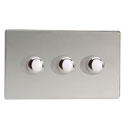
The Varilight LED Compatible Dimmer range is an excellent choice for LED lighting circuits, whilst also offering compatibility with other technologies (including some dimmable CFLs). The award-winning Varilight V-Pro range is widely revered as one of the best LED dimmers on the market. This particular model has a minimum 2.5W load.Varilight 3x300w gang led compatible dimmer in polished chrome

Various models from the Varilight V-Pro range are available from Lyco, including a 3-gang switch with a minimum 2.5W load per gang. By controlling multiple luminaires you can fine-tune areas of light and dark, which is a sure way of creating drama and ambience.

Bringer of light

Light switches are bringers of light, and though they’re part of everyday life, they also allow you to express yourself by adding finishing touches to décor. A wide choice of switches is available, from basic no-thrills to refined and stylish. You can even assume the role of lighting technician, using a dimmer switch to creatively control layers of light.

Why not take a look at our full range of switches and dimmers.

Looking for more advice or inspiration? Take a look at our Lighting Advice section.

andrew-author-bio

Andrew Evangelidis Head of Buying

Andrew is an experienced buying professional who takes an entrepreneurial approach to identify new lighting solutions and ensure Lyco have first-to-market ranges for our customers. Having previously worked for well known brands such as Wickes, Carphone Warehouse and Toys R Us, Andrew has now turned his hand to sourcing commercial lighting and ensure our customers receive top brand quality products at marketing leading prices. He manages a team of commercial and decorative buyers who travel the world finding new products that our customers don’t even know they need yet.